Wednesday, November 30, 2005
BEATING SUGAR ADDICTION
 Once again it's Wednesday. On this blogsite, Wednesday is beat my sugar addiction day. I invite you to rummage for wisdom here to pass along to someone you know who may be dealing with similar affliction.
The following excerpt is from Mystic Visions’ The Sugar Addicts Anonymous:
Most of us don't realize it, but we are drug addicts. Our drug comes in a pure, white crystal or powder form. We use it even when we don't know we're doing it. It's in salad dressing, peanut butter, soup, pickles, bread, jam, yogurt, canned fruits and vegetables... We crave it after every meal. On an average, each of us consumes about 130 lbs. per year. What is this controversial drug, you ask. It goes by many names, but the most common is sugar.
This deliciously sweet substance is also deliciously devoid of any nutritional value. Sugar passes through the wall of the stomach so quickly that it causes blood sugar levels to skyrocket, then plummet just as rapidly. I'm sure you are familiar with the feeling.
The problem that arises in coping with sugar addiction is that sugar is in so many common foods now, it's practically impossible to cut it out completely. You can't eat a sandwich without getting sugar from the bread or the mayo. You can't eat a salad without getting sugar from the dressing.
Beating sugar addiction may seem like a hopeless battle, but just like any drug addiction, you have to have a structured plan to win the war. I make no claims that it will be an easy battle. You won't be vomiting in back alleys or shivering in bed all night, but you will have the uncontrollable desire for something, anything that will give you your sugar fix.
Check out the 12 Step Program to Beating Sugar Addiction by James Keller. Good luck!
The Mystic Visions
www.aksworld.com
Labels: health issues
posted by Señor Enrique at 7:15 AM
| 1 comments


Tuesday, November 29, 2005
THE BEATLES: The Biography
 At nearly 1,000 pages long, including more than 100 pages of footnotes, bibliography, discography and other end matter, "The Beatles," by Bob Spitz, is as big as a Bible. But as we hefted this literary cinder block and contemplated reading it, we had to wonder what could possibly be left to say about the musical foursome whom John Lennon once declared more popular than Jesus.
Ten pages in, we were hooked. Bob Spitz's beautifully written chronicle breathes new life into the familiar story of the Liverpool boys who conquered the world and became, according to a recent Variety poll, the most influential entertainers of the past century. The author's passion for his subject, and for every nuance of every scene, electrifies even the most familiar moments in the legend. Spitz cast his net wide, gathering little-known information from contemporary radio interviews, fanzines, Brian Epstein's personal diaries, and such arcana as the architectural renderings for John and Cynthia Lennon's home and a pamphlet called "A Short History of the Liverpool Cotton Market." The scene-by-scene particulars are fascinating; for example, the description of Ringo meticulously rolling up towels to seal the threshold under the door of a room at the Delmonico Hotel in New York the night in 1964 when they met Bob Dylan and Dylan introduced them to marijuana. "An unusually gregarious Dylan was delighted by the Beatles' curiosity and readiness to experiment," Spitz writes. "They got right in the groove, which relaxed the recalcitrant bard, who lit joint after joint, fanning the fateful flame." The chapter ends: "Nothing would ever be the same again."
Read more: You Know You Should Be Glad, a review by Jane and Michael Stern (The New York Times)
The Beatles: The Biography, by Bob Spitz
Published: November 27, 2005
Labels: Featured book
posted by Señor Enrique at 2:49 PM
| 0 comments
SILENCE

- Ralph Waldo Emerson
Labels: Words of wisdom
posted by Señor Enrique at 7:31 AM
| 5 comments
Monday, November 28, 2005
WHAT'S IN THE NAME?
 I was born in the year of the dragon in Santa Cruz, Manila, and given the name Enrique after the father of a famous Filipino actor Pancho Magalona. I liked it; not too many kids have that same name at that time.
However, I became to detest it while growing up. Although nicknamed Ric, I would be called Enrique—and rather sternly at that—whenever suspected of some mischief or worse, I had to run another errand, which none of my older brothers were willing to do.
Consequently, hearing it called out by my mother, eldest sister, or by any of the five older brothers on the totem pole made me associate Enrique with agony and/or resentment.
I began to avoid using that name unless required as in school documents or passport application. In school I was referred to by my last name. The only other place I was called Enrique was at the Jai-Alai fronton when I became an amateur at the age of fifteen. The man who managed the amateur club at that time delighted in calling me Enrique. I knew better than to correct him lest I wanted to be paired against a senior player whose sole aim was to bash in a novice’s front teeth with his menacing carambola. No protection of any kind was worn at that time.
After high school was New York. At that time, Julio’s son with a Filipina socialite was not yet around; thus, New Yorkers would often mispronounce my name as Ahn-ri-quah or Ahn-rick. Soon, I was nicknamed Eric to make life simpler for everyone.
When I lost my green card, I was informed by the immigration officials that applying for American citizenship would be a lot easier than to go through the legal process of having it replaced. When I opted for the citizenship I dropped Enrique altogether for Eric. It was a decision I came to later regret.
Since coming back to Manila, I was haunted by my old name; hence I started using it as a pen name, but added senor as prefix to denote a much older (and hopefully, wiser) Enrique. However, with our society being more attuned to English names nowadays, to some, Senor Enrique conveys an old world distinguished persona or someone well-versed in Spanish language and history -- an ilustrado.
The fact is, although I had Spanish in high school, I was more fluent in Spanglish, which I would use in San Juan, Puerto Rico or amongst Hispanic friends in New York. That was the extent of my experience with the Spanish language.
But then again, the Spanish spoken in Puerto Rico is debased Castilian. So, when Rizalist had asked for my definition of a bodeguero as applied in late 19th century Manila, I would have instinctively depicted a brawny peon hauling stuff in a bodega, but would have been proven wrong anyway. A bodeguero, as Rizalist himself had pointed out, was a member of the bourgeoisie or better yet an illustrado; therefore, more of a manager in those days. Actually, I tend to believe his having asked for my thoughts on such linguistic matter was his gentlemanly way of inviting me to join in their blog exchanges. Unfortunately, I never made it back to Marvin’ site after having expressed my gratitude for his efforts.
As for history, I often resort to knowledgeable friends, books, and more recently the Web and blog sites such as La Vida Lawyer’s series on Bonifacio’s trial. Daunted by the fact that history is written by the winners, as Marvin Aceron and Carlos Celdran had said, I’ve shied away from engaging in its discourse. Had I the photographic mind of Fidel Castro, who could quote verbatim immense passages, including their provenance with uncanny precision, I’d gladly do so. That is because if unsuccessful with my arguments, I could at least dazzle the other side with startling quotations.
I therefore apologize, especially to Rizalist if my nom de plum tips off a wrong clue. I’m merely reclaiming a part of myself—a name I now treasure as I get older, but used to loathe when younger, because of the never-ending errands (and on rare occasions, mischief) attached to it.
Ah, the pains of being the youngest in a big family.
*
Labels: Growing up memoirs
posted by Señor Enrique at 6:36 AM
| 12 comments
Sunday, November 27, 2005
Featured Book: REAL MAGIC
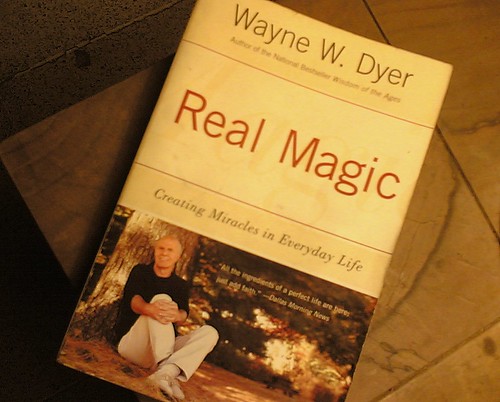
By Wayne W. Dyer
Quill, an imprint of HarperCollins Publishers
I was blessed with having mentors in my life. Had it not been for their time and patience I never would have known the value of creating options for myself, as well as seeking alternative paths in the pursuit of a more fulfilling career and personal life. And so, when I had acquired some years and wisdom, in reciprocity, I engaged in mentoring.
For the most part, I would stress the importance of spirituality in one’s life; not so much religiosity, but rather an inner knowing of one’s connectivity with others and the universe. I did this by recommending a study of a martial art and the book, Zen in the Art of Archery. Learning martial arts, by the way, also hones one’s ability to focus in spite of tumultuous factors that may surround him.
Almost in all cases, the topic of cultivating financial security from one’s career would arise. New York has a glut of financial wiz and planners who offer guidance, as well as a number of respectable graduate schools to acquire appropriate credentials from in order to enhance one’s resume and earning power. Either one should be able to address the issue.
However, there are other more affordable alternatives such as Dr. Wayne Dyer’s book, Real Magic, and another I had previously featured, As a Man Thinket by James Allen.
In Real Magic, Dr. Dyer basically points out that everything we need to acquire prosperity has always been within us, but we must first eliminate the hindrance—the scarcity consciousness—which prevents us from experiencing abundance in our life. He illustrates this principle with the following story:
A man who was ragged and appeared to be without anything in a physical sense came upon a road boss and said, “Can you help me? I need work.”
The road boss said, “Fine, take that large boulder over there and roll it up and down the hill. If you need work that will fulfill your need.”
The man said, “You don’t understand, what I really need is money.
The boss replied, “Oh, if it is only money that you need, here is fifty dollars. But you cannot spend it.”
Again, the man was perplexed. “You don’t understand, what I really need is food and fuel and clothing, not just money.”
The boss again replied, “If you are sure that this is really what you need, then spend the money for food, fuel and clothing, but don’t eat the food, or burn the fuel or wear the clothing.”
The man was finally forced to look at what he really needed, which was a sense of security, peace and inner satisfaction. All totally invisible, all within the mind. All divine sustenance.
The author further claims, “What you need, you already have, and when you know it, and go within and create it in your mind, the divine sustenance you seek in the form of material things or money will be manifested in whatever amounts needed.”
That whenever we say to ourselves, “I don’t have enough money,” “The economy is bad these days,” “I don’t have the appropriate educational background,” or, “I didn’t come from the right family and therefore, will never get the promotion and earn the money I want,” we are operating in our mental world from a position of lack or the underprivileged. Therefore, we deprive our own self the opportunity of going into the world of real magic; hence unable to experience a life of prosperity and abundance.
Dr. Dwayne Dyer also mentions of the time he was accused of having a cavalier attitude toward the poor by a radio talk show host when he was a guest on his program. Dr. Dyer’s contention was that being broke is a temporary state of affairs that afflicts everyone at some point in life, but being poor is an attitude, a set of beliefs that gets reinforced when we shift to blaming life circumstances for the condition of poverty.
One of the incoming calls in response to this radio conversation was from a physician in Washington, D.C., who had grown up in a family of thirteen children in appalling poverty in Jamaica. He disagreed with the host, saying:
I lived in dirt-poor conditions all of my life. I mean hungry, starving poverty. But I always had a vision of myself as a doctor. I could not lose that vision, and I would always tell my grandmother about that picture in my head. She was raising all of us on practically no income, and she always told me to never, but never, let the picture become blurred. She told me about the value of that inner picture, and that I always kept it, and believed in it, I would only have that picture to act upon.
As I got older and finished high school, I applied to several schools in premed curricula, and I was rejected over and over again, but I could not shake that picture that my grandmother helped me to have as a ragtag little boy playing with the chickens in our little hut in Jamaica. Finally I was given a conditional opportunity to enroll in a premed program in Europe, and I worked my way there and through school.
Today I am a physician with a thriving practice. Without that vision, without that invisible picture in mind, I could never have escaped the life of poverty that continues today for most of my brothers and sisters and all of my friends there. They live in poverty and believe that life dealt them a stacked deck, and that I was lucky. But I know better. I am living the life I pictured for myself.
And Dr. Dyer, don’t you ever let anyone dissuade you from telling the truths that you know, because you are doing much more to help those in horrible circumstances than those who buy the big lie that their lives are beyond their own control.
Dr. Dyer asks his readers to suspend any erroneous beliefs that these truths apply exclusively to him, the doctor in Washington, D.C. and to a chosen few, but has nothing to do with any of us. In actuality, it has everything to do with all of us.
He argues that these truths transcend individual lives because it involves universal laws and principles that were here long before we all showed up in our physical form. He’s simply reporting on what he knows to be true for his own self and many others. That if you want to experience prosperity in a miraculous level, he suggests that you must leave behind your old ways of thinking and develop a new way of imagining what is possible for you to experience in your life.
The old tried and true adage supports Dr. Wayne Dyer's principle: Thoughts manifest themselves.
Ask and you shall receive, applies as well.
Labels: Featured book
posted by Señor Enrique at 7:23 AM
| 0 comments
Saturday, November 26, 2005
ABOUT MANANG SETA
 Manang Seta is able to do remarkable feats in her dreams—she can be the prima ballerina of the national ballet, overcome her fear of snakes, sail solo to distant seas on her high-tech yatch, or become a sultry jazz singer in New York’s Carlyle Hotel with Bobby Short on the piano. And through it all she never once doubted her abilities to become any of those things
However, in her waking state, Manang Seta is a fearful, doubtful woman. Even the simplest of choices would make her eternally indecisive. Her basic arithmetic skills would escape her; she’d leave the market always feeling short-changed. Her sense of direction would get hazy; driving to and from nearby destinations has become a daunting task.
She was never like this. She was once jovial and vivacious. However, going though a lengthy bitter divorce has traumatized her deeply. She gained weight which made her look distinctly aged. She failed to understand how her husband could easily trash away their 35-year marriage. Worst of all, her two daughters sided with their father; leaving her feeling completely abandoned and confused.
The court was fair with settling their disputes. She was awarded half of their total assets. Right after liquidating most of which, she went home to the Philippines to heal her soul. Only problem was she was away for so long the landscape has changed; it appeared foreign to her.
Her sister, Aling Meding, exploited her vulnerabilities with a vengeance. She assisted Manang Seta all right, but unbeknownst to her, Aling Meding would tack on a few bucks for everything her sister would ask her to get for her. She made a substantial profit when Manang Seta had entrusted her to shop for all her appliances and furniture for her condominium in Makati.
Aling Meding for many years has been dependent upon her sister’s generosity. In fact, her four children were educated in large part by Manang Seta. More than 20 years ago, Aling Meding left her husband and took the children with her without so much as asking her husband for child support. She obligated her sister and brother in the States instead.
Aling Meding’s children are all grown up now and married, except for the oldest son who is holding out for a rich woman to marry. The other boy and two girls have children of their own, yet Aling Meding has been slyly maneuvering for Manang Seta to absorb the grandchildren’s schooling expenses as well. All her children, at one time or another, had asked Manang Seta for loans, but obviously with no intention of repaying her. Aling Meding does not ask for any loans, but nonetheless expects her sister to give her a monthly living allowance. “Why not … she has money, no?” she would argue.
Nowadays, Manang Seta spends most of her time in Metro Manila alone or with the company of her maid. She has learned to find her way around the city without the guide of her sister. Actually, ever since she expressed a lack of interest to support Aling Meding and her children’s families, their relationship changed.
Aling Meding is angry at her sister for the simple reason that Manang Seta has money, yet refused to share it with her willingly. As revenge, she has instructed all her children to ignore their aunt. “That’ll break her,” she would claim. Much to Aling Meding’s ignorance, she doesn’t realize that Manang Seta’s many years of having lived in New York had taught her to be self-reliant and cognizant of people with ulterior motives.
She gets along quite well with her new maid; unlike the previous two referred by Aling Meding who were more loyal to her than to Manang Seta. This one was referred to her by the family of a very good friend from New York. She takes her along to every where she goes. Recently, Manang Seta had suggested for her to take up a vocational course in the evenings in which she’d gladly pay for.
She has been living in Metro Manila for almost two years now, and had adjusted to its hustle and bustle rather well. To help her resolve any leftover inner turmoil caused by her failed marriage, she has enlisted the assistance of a psychologist. She’s learning some relaxation techniques to help her focus better on daily activities, as well as in dealing with unexpected challenges. Most importantly, she’s learning how to forgive her husband and her own self from being unable to sustain their marriage as per their vows.
She has also started to love her two daughters even more, and has refrained from expecting them to fight her battles. As for her sister Meding and her children, she reasons she has helped them long enough; it’s time they all start learning to help themselves earnestly. And if they wish to alienate themselves from her, so be it. She’ll manage with or without them.
Links
Coping with Divorce
http://www.mentalhelp.net/psyhelp/chap10/chap10p.htm
Balikbayan Chronicles
http://www.filgifts.com/ffp/chronicles/read.asp
Money Matters with Relatives and Friends
http://www.cahe.nmsu.edu/news/1999/010199_RISKY.html
Labels: Fiction
posted by Señor Enrique at 8:27 AM
| 2 comments
BY ALING MEDING
 I left my husband, mind you; she, on the other hand, was abandoned by her husband. The fool ran off with his secretary. Not only that, her daughters decided to live with their father, not with her. That should tell you enough about Manang Seta!
So, what is so wrong about my expecting her to help me out? She has money; I don’t. Yes, I admit if it wasn’t for her and our brother, Edward, none of my children would have gone on to college. I thank them very much, but hey, I have six grandchildren now and you know how fast time flies. Before you know it, they’ll be getting ready for college as well.
She’s telling me she has to be careful with her money and stuff, but look where she bought herself a condo; in fancy Ayala Avenue! And she got herself a brand new Civic too. By the way, when I was with her checking out some condos when she first got here in Manila, I thought she would get a two-bedroom for the two of us. Lo and behold! All along she only wanted a one-bedroom condo just for herself. How selfish!
And so what’s wrong with my padding up the actual costs of her furniture and appliances? That was a lot of work doing all that shopping for her. I got to make money somehow, no? And don’t worry she got plenty. I was with her when she opened a dollar account and a peso checking account at BPI. I was told to wait outside the manager’s office so, I didn’t really find out the exact amount, but I’m sure it was big. You should have seen those bank personnel treating her like royalty.
Don’t you worry about my oldest son, Edgar. He’s fine. He knows what he wants from his life. He’s quite a looker and there ain’t nothing wrong if he wanted to marry a rich girl. The boy deserves it. He’s a college graduate and one of these days he’ll pass his board exam. I know he failed three times already, but he wasn’t feeling so good when he took them. The boy was down with the flu. So, just let him be. He told me one time, “You know, mommy? I’ll take care of you. Promise!” That’s my baby boy!
And don’t you get me started with the money my kids borrowed from Manang Seta, now. They got themselves in a jam, you know. Times are bad these days. And that old hag had the audacity to make my kids feel ungrateful whenever they ask her for another loan or something. Well, she would tell them they should learn to be more careful with their spending habits and that they should be saving some money, too … blah, blah, blah.
Now, how does she expect the kids to save when they ain’t got no money to begin with? So, can you blame my kids if they don’t want to see their aunt no more?
I got to go. I have to take the grandchildren to see Harry Potter. Don’t wait up for us. We’ll all eat at the mall after the movie.
Bye, sweetie!
Labels: Fiction
posted by Señor Enrique at 8:16 AM
| 2 comments
Friday, November 25, 2005
A STATEMENT ON LOVE

Love is union under the condition of preserving one’s integrity, one’s individuality. Love is an active power in man; a power which breaks through the walls which separate man from his fellow men, which unites him with others; love makes him overcome the sense of isolation and separateness, yet it permits him to be himself, to retain his integrity. In love the paradox occurs that two beings become one and yet remain two.
Labels: Featured book
posted by Señor Enrique at 3:57 AM
| 2 comments
Thursday, November 24, 2005
The Wit & Wisdom of MARK TWAIN
— Mark Twain
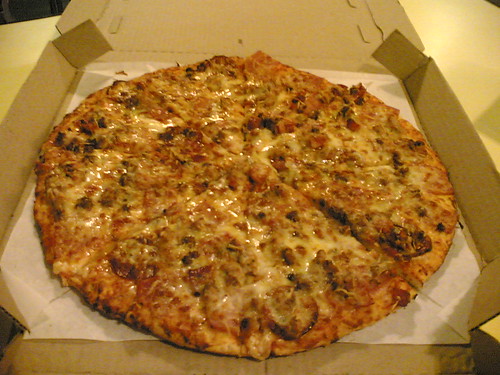
I love pizza. I practically lived off on them while a working student in New York. I had them for lunch and dinner, including the right-off-the-fridge leftover on Sunday mornings. When you get up at 7 in the morning and don’t get home until 10 at night, pizza was more than good enough.
It was while enjoying some chilled brew and feasting on a large pizza pie—on my birthday almost 10 years ago with my two best friends—when I learned something new about Mark Twain. It was because one of them gave me a copy of Sitting in Darkness; the backdrop of which was the Filipino-American War.
While flipping through its pages in between taking bites off a slice of pizza, I learned the title of the book was taken from one of Mark Twain’s essays. And much to my surprise, I also learned he was a staunch anti-imperialist who gave the Filipinos a voice in the American press during the turn of the century.
Through his essays, Mark Twain articulated his sentiments against America’s occupation of the Philippines. He became an active speaker at anti-war rallies and flooded newspapers with his letters of protests. With a caustic tone he even suggested a new flag for the Philippines — "just our usual flag, with the white stripes painted black and the stars replaced by the skull and cross-bones."
In his 1901 essay entitled, To the Person Sitting in Darkness, Mark Twain pointed out how the occupying Americans treated the Filipinos.
He wrote, “We had lent them guns and ammunition; advised with them; exchanged pleasant courtesies with them; placed our sick and wounded in their kindly care; entrusted our Spanish prisoners to their humane and honest hands; fought shoulder to shoulder with them against the common enemy (our own phrase); praised their courage, praised their gallantry, praised their mercifulness, praised their fine and honorable conduct; borrowed their trenches, borrowed strong positions which they had previously captured from the Spaniards; petted them, lied to them—officially proclaiming that our land and naval forces came to give them their freedom and displace the bad Spanish Government—fooled them, used them until we needed them no longer; then derided the sucked orange and threw it away. We kept the positions which we had beguiled them of; by and by, we moved a force forward and overlapped patriot ground—a clever thought, for we needed trouble, and this would produce it. A Filipino soldier, crossing the ground, where no one had a right to forbid him, was shot by our sentry. The badgered patriots resented this with arms, without waiting to know whether Aguinaldo, who was absent, would approve or not. Aguinaldo did not approve; but that availed nothing. What we wanted, in the interest of Progress and Civilization was the Archipelago, unencumbered by patriots struggling for independence; and War was what we needed. We clinched our opportunity. It is Mr. Chamberlain’s case over again—at least in its motive and intention; and we played the game as adroitly as he played it himself.”
One scholar, Tom Quirk, noted, "Particularly in his later years, the fierceness of Twain's anti-imperialist convictions disturbed and dismayed those who regarded him as the archetypal American citizen who had somehow turned upon Americanism itself."
Who would have thought that Mark Twain—the author of Huckleberry Finn, the first truly American writer known for his wit and wisdom—would be so radical and intrepid as to speak for the Filipinos and against the American occupation of the Philippines?
Complete version of To the Person Sitting in Darkness by Mark Twain
Mark Twain Biography
Tom Quirk
edited Mark Twain's TALES, SPEECHES, ESSAYS AND SKETCHES
Sitting in Darkness, Americans in the Philippines
By David Haward Bain
1984, Houghton Mifflin Company
A review of Sitting in Darkness, Americans in the Philippines,
by T. BAILEY, The Washington Post, February 24, 1985
Labels: Featured Writer
posted by Señor Enrique at 7:31 AM
| 4 comments
Featured Book: SITTING IN DARKNESS
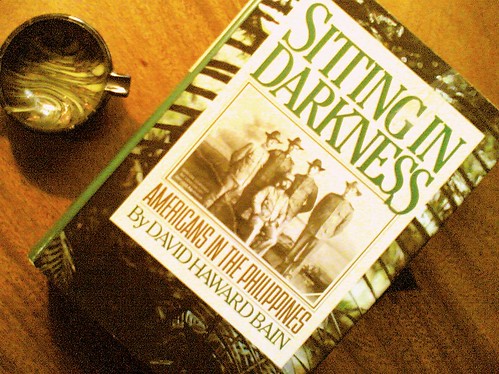
My best friend in New York gave me a copy of this book as a birthday gift 10 years ago. The following is a review of it by T. Bailey of The Washington Post (February 25, 1985):
IN WHICH WAR was the term "Gook" invented? When did American soldiers conduct their first body count and pioneer the use of the "water cure" to persuade Asian guerrillas to betray their comrades?
After which battle did a young rifleman write home to the folks in Kingston, New York, "I am in my glory when I can sight my gun on some dark skin and pull the trigger"?
Modern as it all sounds, the answer is not Vietnam, or even Korea or World War II. The American conquest of the Philippines barely rates a mention in school history books, usually as a cryptic footnote to the short war which President William McKinley and publisher William Randolph Hearst waged on Spain in 1898 for the independence of Cuba and the circulation of Hearst's newspapers. Yet 126,458 Americans fought in the Philippines between 1898 and 1902, of whom 4,234 died, while 16,000 Filipinos died in battle and another 200,000 in "reconcentration camp." There were in addition massacres of civilians in reprisal for guerrilla attacks and similar sideshows all too familiar in subsequent Asian wars.
The story of how, and why America liberated the Philippines from Spain and then took the islands back from their inhabitants two weeks later is a complicated one, already well told in one of the classics of American historiography, Leon Wolff's Little Brown Brother, published in 1960. But the writing of history is never finished, and David Haward Bain has managed another fine book on the subject, not disagreeing with Wolff's conclusions, but making them fresh and vivid for a generation which has seen yet another Asian war.
This is not, however, simply another tale of savagery in the rice paddies. Almost as if he could read tomorrow's newspapers, Bain has brought his account up to the minute, with perceptive entries, for instance, indexed under Aquino Benigno and Ver, General Fabian (the latter currently on trial for complicity in the former's assassination). This energetic young historian has thus pulled off that rarest of publishing coups, a scholarly historical work of bang-on topicality. He has, what's more, found a most original way of bringing his story to life.
From this distance, and even at the time, the American conquest of the Philippines has always been difficult to fathom. But, then and now, two figures jump forth from a cast of thousands: Emilio Aguinaldo, not quite 30, brave and passionately patriotic, the president of the republic of the Philippines proclaimed as the beaten Spaniards departed (and the first republic in Asia) and Colonel Frederick Funston, six years older, who drove the last nail into the republic's coffin by capturing Aguinaldo on March 23, 1901, after a long and daring hunt through the jungles and mountains of northern Luzon.
Aguinaldo, who looked remarkably like his current successor, Ferdinand Marcos, survived his capture and lived a long life, long enough to welcome the arrival of the Japanese in 1942 (understandably, perhaps; the new invaders also promised liberation), to march in the Manila independence parade of 1946, carrying the flag he first raised against Spain in 1896, and to see a new American war just getting under way in Asia in 1964, the year of his death. A largely forgotten figure now, even in the Philippines, Aguinaldo emerges from Bain's book an authentic hero and his republic a tragically missed chance for the United States to have been the protector of Asia's first genuine democracy.
His captor, the adventurous son of a Kansas politician known as "Foghorn Funston, the farmers' friend" was plainly just as archetypal a figure. "I am afraid that some people at home will lie awake nights worrying about the ethics of this war, thinking that our enemy is fighting for the right of self-government" he told a New York Times correspondent. "The word independent, which these people roll over their tongues so glibly, is to them a word, and not much more . . . . they are, as a rule, an illiterate, semisavage people, who are waging war, not against tyranny, but against Anglo-Saxon order and decency." Funston's feat, a mixture of reckless daring and ingenious double-cross, or what used to be known in Vietnam as a "John Wayne stunt," was the stuff of movies, and would have made a splendid vehicle for James Cagney (Funston was 5 feet 4 inches tall and touchy about it) if Hollywood had blossomed before American imperialism went out of fashion.
BUT, LIKE MANY a veteran from the East, Funston could not settle down to life back home, took to the bottle and died at 51 in 1917, when he was being seriously considered for command of the American Expeditionary Force that went to France that year. But for his heart attack, in fact, we would very likely now be debating the merits of the Funston rocket instead of the one named for his deputy, General John Pershing, who got the job instead.
Here, unmistakably, we have the Green Beret, or cowboy turned romantic military stuntman. In fact, Funston's boss, General Arthur MacArthur, father of the even more famous Douglas, was an old Indian fighter, and so were many of his buddies in the 20th Kansas infantry he led to the Philippines. The fact that the Far East is West of the Wild West has profoundly shaped America's wars there, a point made in the insightful and absurd movie The Deer Hunter.
It is hard to quarrel with Bain's conclusion that the years of American rule did little or nothing to solve the basic political problem of the Philippines. After three centuries of Spanish colonial government, the islands had none of the institutions of self-rule and no experience of it. All the new rulers achieved was a superficial Americanization of the illustrades, the Hispanicized native upper class, leaving the masses in pious poverty and the way open for a native-born dictatorship to follow the authoritarian rule of slippery Spaniards and decent Anglo-Saxons. People learn self-government by governing themselves and making their own mistakes, and America put off the Philippines' fateful day for 50 years, failing, in the end, even to supply the military protection that is the only justification for empire.
But Americans are still well thought of in the Philippines, as Bain and a group of friends, including his photographer-brother Christopher, discovered when they repeated Funston's epic trek through the Luzon jungle in 1982, talking to the same locals, fording the same streams, and being bitten by descendants of the same mosquitoes which bit the pint-sized adventurer and his party 80 years earlier. Melding past and present, and interweaving the historical background with present politics brings vividly home the long shadows still cast by America's first adventure in Asia. This is an important story, honestly researched and well told -- a second classic, in fact, on a fascinating subject.
Review by T. BAILEY
The Washington Post, February 24, 1985
Sitting in Darkness, Americans in the Philippines
By David Haward Bain
1984, Houghton Mifflin Company
Related link: Same As It Ever Was
Labels: Featured book
posted by Señor Enrique at 4:32 AM
| 4 comments
Wednesday, November 23, 2005
SWEETS FOR MY SWEET CHILD

Last Wednesday, I mentioned seeking the help of a local spiritual healer since my New York physician was unable to curtail my sugar cravings. Last Friday, my aunt came over with one. She’s a rather stocky Visayan about 55 years old. Her father used to be their town’s albularyo (medicine man) and had passed on the torch to her, so to speak. She does her healing through hilot (massage); however, she would first go into a trance-like state to allow her spirit guide to take over and pinpoint any health problems the client might be suffering from.
There wasn’t any health problem seen in me. As for my sugar dependency, she simply recommended to put some diced ginger in boiled water; that whenever a craving for sweets kicks in, I should have a couple of sips of it. Moreover, she claims ginger is good for flushing out the impurities that may clog our arteries.
She then proceeded to give me a massage with oil of her own concoction. The diagnosis sort of left me in limbo; I thought my complaint was taken too lightly. The massage, on the other hand, was incredibly soothing. It was by far the most healing I had ever experienced. She detected several lamig spots (knots) all over my body and worked on each one methodically. After it was over, all I wanted to do was sleep. I felt invigorated but at the same time weakened by the entire session. The next morning I felt extremely revitalized.
The hot ginger drink works so far in suppressing my sugar cravings. I complement this regimen with certain tricks learned from the past like immediately brushing my teeth after each meal. This way, any leftover salty or spicy tastes in my mouth would be washed out and no desire for sweets would be triggered.
In addition, so as to prevent sugar attacks, I limit myself to fructose, which is sugar from fresh fruit. I also limit my intake of rice (a real challenge since it’s a regular staple that goes with any Filipino dish). Rice and other carbohydrates like bread and potatoes turn into sugar once ingested. So for now, I have to resist the indulgence and adhere to moderation. As we all know, one of the adverse effects of sugar addiction is obesity.
Incidentally, this week, Inside PCIJ is running a series of reports on the theme, Food and the Filipinos. One of which is Vinia Datinguinoo’s The Big Picture, which outlines why Filipinos—especially their children—are becoming overweight and obese. Overall it’s an excellent report, but I was rather disappointed that she didn’t elaborate further on the contributions of refined sugar to this growing dilemma. However, she writes, “Health nutritionists and experts agree about the ingredients that make up what they call an obesogenic environment, one that makes people grow fat, fast: high-fat, high-salt, and high-sugar diets.”
In the States, the press is intimidated by the almighty sugar industry; not to mention that Washington is blatantly subservient to its powerful lobbyists. Oftentimes, it’s also the case of the publishers not wanting to miss out on the millions of advertising dollars doled out annually by various sugar-rich product manufacturers. This is the reason why there isn’t much public awareness of the addictive nature of sucrose in America.
Sadly, those who deny this fact are almost always addicted to sugar themselves without admitting it. It’s sad because in their denial, they subconsciously pass on their addiction to their children. For those who think refined sugar does not adversely affect them health-wise, my intention is to make them aware enough so they may at least save their children from sugar addiction. In short: if not them, their children.
To cite an example as to how sugar encroaches its way into our homes and wins over our children, the article Sugar, Sweet Suicide claims, “With only 16 calories per teaspoon, what's the harm in a little sugar? Problem is, we can't get enough of the stuff. In a world where soft drinks and processed foods have become dietary staples in lieu of fresh fruit and vegetables, fiber-rich grains, and pure water, people are swallowing an average of 4l teaspoons (or 201 grams) of sugar daily, 31 teaspoons more than the maximum amount recommended by the United States Department of Agriculture (USDA). Over time, that adds up to a whopping 162 pounds per person per year. And when you consider that part of the population eats far less or no sugar at all—diabetics or babies, for instance—that figure further soars. Thanks to their love affair with soft drinks, many children are at the higher end of this scale, consuming an additional 21 teaspoons of sugar daily.”
Next Wednesday, I’ll cite more instances as to how sugar affects our minds and bodies. I will also write about other resources in my battle to overcome my sugar addiction.
Until then, to borrow from Crosby, Stills, Nash & Young, “love the one you’re with.”
Links
Advice for Parents with Overweight Kids
A major lifestyle change means deciding as a family that everyone changes
The Big Picture - Why Pinoys Are Fatter Than Ever
By Vinia M. Datinguinoo - Philippine Center for Investigative Journalism
The Politics of Sugar
NAFTA, GATT and SUGAR
Sugar, Sweet Suicide
Townsend Letter for Doctors and Patients
The Addictive Personality: Take the Test,
Disorders by Enneagram Type
Labels: health issues
posted by Señor Enrique at 4:34 AM
| 4 comments
Tuesday, November 22, 2005
Featured Quote by OPRAH WINFREY
 Sunrise @ New York City Harbor
Oprah Winfrey
Oh, Oprah, 20 Years of Talk, Causes and Self-Improvement
By Alessandra Stanley, The New York Times
“Most significantly, she presents her triumph over adversity, discrimination and child abuse in positive terms that allow Americans to feel better about themselves - a quid pro quo that she shamelessly exploits for good, goading viewers to improve themselves and also give something back. Ms. Winfrey, who speaks in slow, emphatic phrases, can be deadly earnest at times, but she also brought fun to philanthropy. Hers is a frilly pulpit: the self-made billionaire appears to spend as freely and gleefully on friends, strangers and the needy as herself.”
Read more…
Labels: Words of wisdom
posted by Señor Enrique at 5:41 AM
| 0 comments
Monday, November 21, 2005
MY LIFE WITH A PIG
 It was only for about a month one summer when I was 6 years old. Our barrio is the last of Subic; the next town, separated only by a river, is Castillejos. This is in Zambales. My aunt, unable to find me a puppy (or so she said) tied a rope around the neck of one of her piglets and let me have him as my summer pet. I reluctantly took it thinking she had gone batty from drinking the elixirs bought from a salesman who traveled through our barrio. That following weekend when my father came, I told him about his sister’s vice, but he ignored me. He paid more attention to my pet pig.
My father always gave me a puppy during the summer and just before school would start, it would be sent off to my aunt’s in the province. One summer, when I was about five, the puppy I had once taken care of had grown into a vicious guard dog and would only respond kindly to my aunt. When I arrived for my summer vacation, he saw me as nothing more than an intruder. He incessantly barked and snarled at me. I was upset by it. I thought he was an ungrateful scruffy dog worthy of serious discipline from his master—me.
The next morning, I grabbed one of the rakes leaning against the side of the tool shed and proceeded to scare him with it if he didn’t learn to hush at my presence. He only got meaner and his barking increased even more in intensity. I stopped when I heard my aunt calling me. She handed me two pieces of corn bread as late morning snack, which I decided to share with that scruffy dog chained under a tree. Stupid me, I pulled a stool to sit next to him so we could eat together like we used to when he was a puppy. Instead of going for his piece of corn bread, he went for my right thigh.
My aunt was worried to death; not because I got bitten, but how my father might react when he found out. Twenty-five excruciating shots I had to endure during that summer vacation. The doctor would always have a little plastic toy for me or a piece of candy, but I was always so traumatized by the needle that I enjoyed none of it. So, the next summer when I was asking her for a puppy, she thought I might be safer with a pig.
We became the laughing stock to some of the folks in that barrio, but I paid them no mind; wherever I went, there, tagging right along was my pet pig. He was a dark brown with spots of mostly tan and lighter shades of brown. I had trained him well enough that he no longer required a rope around his neck.
I would also regularly bathe him with soap like I did with my puppies. He was regularly groomed and kept clean that my aunt allowed him inside the house much to the envy of that vicious scruffy dog tied under the tree. In the afternoons when we went swimming at the river, he would occupy himself by sniffing along the bank. Sometimes, he’d find himself a shade and take a nap. He would awaken when it was time for us to go home.
People would also find us sitting by the sideline during the inter-barrio basketball games. Some of the players asked me to have him as their team mascot but I refused. I knew he’d end up as pulutan after the tournament. But my pet pig proved to be a great distraction to the opposing teams that we soon got the respect of the barrio’s comedians; we were no longer the butt of their jokes.
There was also the summer evening dance on that same basketball court in which the lights and music would be powered by a generator. My pet pig, cousins and I would be at the far corner where we would watch the barrio’s young ladies and men having the time of their life. We would poke fun at our older brothers on the dance floor while my pet pig next to me tried to make sense of the whole event.
Twice a month, a Sunday mass would be held in our barrio’s chapel next to the basketball court and my aunt would prepare the after mass breakfast. It was a big effort since other relatives would come over, including the visiting priest and his entourage from the church in Castillejos. I guess it was my aunt’s show of gratitude for having been blessed with a good income from her backyard poultry and piggery business.
My going back to the city coincided with one of those after mass breakfasts. It was actually a grander affair because my entire family was there to take me back home. Instead of immediately joining everyone for a hearty meal after mass that morning, I was running around frantically looking for my pet pig. I actually wanted to spend whatever time we have left together. And when my father heard me asking for him, all of a sudden he announced that we had to leave and would just have breakfast somewhere along the way. I found myself in this whirlwind of saying goodbye to everybody and then immediately getting whisked out and off on our way home.
The following week, when my father sensed that I was attempting to request for my pet pig to be brought to Manila, he told me the truth. Supposedly, my aunt had mistakenly turned him into a lechon de leche; the table’s centerpiece on that Sunday’s breakfast buffet. And as I cried, my father comforted me by saying that I was right all along; that my aunt had, in fact, gone batty from those elixirs she loved to drink.
Note:
Every now and then I’d still think about that summer with my pet pig. In New York, people I talked to about it were either puzzled or revolted by the idea of my having a pet pig. It wasn’t until later on when it became a more acceptable idea; the evening news during the ‘90s started to feature special interest stories about domesticated pet pigs. People started becoming more aware how smart these animals are. And of course, the movie Babe endeared pigs to a lot of people.
More recently, Oprah Winfrey featured a pet pig that ran out of the house and played dead right on the middle of the street. When a couple of people walked near him, he suddenly got up, made a lot of noise and headed back to the house, but kept turning to look at them. The people followed the pig back to the house and discovered lying on the living floor was his master suffering from a heart attack.
The doctor who treated my dog bite was given a distinguished award a couple of years ago for his services to the poor. I will blog about him another time.
The photograph of a sow and her piglets taken by Noel and featured on his NoelG blogsite inspired me to write this blog.
Labels: Growing up memoirs
posted by Señor Enrique at 6:22 AM
| 11 comments
Sunday, November 20, 2005
WANT TO MAKE MORE MONEY? THINK BIG!
 The impressions of thinking big are widespread and impressive. Thinking big is a magic door opener that broadens your perspective and allows you to see new opportunities. Thinking big makes life easier and a lot more fun. It also makes large profits more probable.
I’ve been repeatedly reminded by successful businesspeople in virtually every field that thinking big is one of the keys to success. Let’s consider a few examples. Successful insurance salespersons insist that it takes the identical amount of time to speak to someone about a million-dollar policy as it does a one-thousand-dollar policy. In the real estate field, the concept of leverage applies whether you’re considering a single-family home or a huge apartment building. This doesn’t mean that you can make money I single-family homes, or that your rate of return will necessarily be higher in with more expensive properties. It merely suggests that the bigger your vision, the larger your potential for success. If you’re trying to sell homes for a living, as an agent, it takes the same amount of energy to ask a wealthy person for their listing as it does a low-end homeowner. You can think small, or you can think big.
In any field where public speaking is in order, this concept is critical. It takes an hour to speak to a single person and the same sixty minutes to speak to a crowd of one thousand or more. The size of your crowd will be affected by the same size as your vision. The concept of thinking big also applies to whom you choose to talk to. Are you frightened to go to the top? If so, you’re missing out. It’s very often the case that the people highest up the ladder are actually the easiest to speak to—and the most willing to help. I’ve had the owners of car dealerships actually sit in the car and give me a test drive at the same dealership where the salesperson on the floor wouldn’t give me the time of the day. But in order to make that happen, I had to ask. In the corporate world, the boss is more often willing to sit down with you, even when middle-level managers treat you with disrespect. It’s a strange dynamic, but it’s often true.
As usual, the primary reason many people think too small is fear. Thoughts like, “I can’t speak to a room full of people,” “I can’t risk taking on a larger project,” and “I couldn’t ask the boss to have lunch with me” fill the mind and are taken to seriously. When fearful thoughts enter the mind, try to banish them. You can do it—once you believe you can. The fear you are experiencing is almost always self-created and usually unnecessary.
I have a friend who spent most of his adult life insisting he couldn’t write a book. This was very puzzling to me, because not only was he an excellent writer, but he also felt quite comfortable writing articles and chapters! One day I asked him to consider the idea that a book is nothing more than a series of interesting chapters put into sequence. As obvious as this was to me, he had never thought of it in those terms. Instead, he had always focused on his stubborn belief that writing a book was too big a project. This simple shift in his thinking made all the difference. Two years later, he finished his first book.
Take a look at your abundance. Is your vision too small? Could you be thinking in larger terms? In most cases, the answer is yes! There may be ways that you can reach more people with the same amount of effort. Regardless of the business you are in, the first step is to eliminate any fear or worry that is getting in our way. As your worrisome thoughts gradually disappear and become less appealing, new ideas and insights will begin to emerge.
Richard Carlson, Ph.D.
Don’t Sweat The Small Stuff About Money
(Spiritual and Practical Ways to Create Abundance and More Fun in Your Life)
Published by Hyperion (New York)
Note:
The other day, I came across an essay by Nick Joaquin, A Heritage of Smallness; an unsettling commentary about the way we Filipinos are unable to tap our full potentialities by confusing timidity with humility. He observes, “We work more but make less. Why? Because we act on such a pygmy scale. Abroad they would think you mad if you went in a store and tried to buy just one stick of cigarette. They don’t operate on the scale. The difference is greater than between having and not having; the difference is in the way of thinking. They are accustomed to thinking dynamically. We have the habit, whatever our individual resources, of thinking poor, of thinking petty. Is that the explanation for our continuing failure to rise—that we buy small and sell small, that we think small and do small?”
And on that very same day, inspired by his recent readings about certain psychological profiles of successful people, J. Angelo Racoma posted on his blogsite, J SPOTTER, Why The Philippines Will Never Be Rich. He argues, “Sadly, we are subconsciously resigned to being a poor people. Our psychological make-up in terms of finances consists of aversion towards money and success. We tend to associate money with greed and evil. We tend to associate ourselves with the poor, and shun the rich. We tend to stick to our comfort levels, never stretching the limits, never taking that calculated risk, never diving into that pool of opportunity armed with the right attitude to swim across to success.”
Consequently, inspired by the abovementioned gentlemen, I’ve decided to dedicate my Sunday postings to serve as a continual reminder that each and every one of us has the power to co-create with the universe a prosperous life.
Have a wonderful Sunday!
Links
Nick Joaquin’s A Heritage of Smallness
http://www.getrealphilippines.com/agr-disagr/17-4-smallness.html
J. Angelo Racoma’s Why The Philippines Will Never Be Rich (J SPOTTER)
http://jangelo.racoma.net/archives/why-the-philippines-will-never-be-a-rich-country/#comments
Conrado de Quiros: There’s The Rub – Day of the Dead
http://dequiros.blogspot.com/2005/10/day-of-dead.html
Labels: Local culture, Words of wisdom
posted by Señor Enrique at 7:35 AM
| 8 comments
Saturday, November 19, 2005
I TOLD HER SO

I told her she should create a special place where she can completely be herself. It might be a room in her house or a park near her home. It might even be a bench at her favorite mall where she can sit and sketch the happy faces of people around her. It might also be a corner table at Starbucks where she can scribble uplifting thoughts. It can be the comfortable lounge chair in her parents’ living room where she can hug an overstuffed pillow.
The only criterion here is it should be a place she can experience what she is and what she might become; a place to roam her field of dreams.
I told her to think of ideal conditions that she wants to manifest in her life. It might be about a more fulfilling love life or the financial independence she has been longing for. I urged her to begin actualizing those desires by creating detailed mental movies about them. And that she should save them in a special place in her mind for her to return to and expand upon on a regular basis.
In case disturbing thoughts overwhelm her consciousness, I told her to keep her eyes closed and focus on her breathing. She should then count the first inhale as one, the exhale as two, and so forth; return to one again after the tenth count. Should those negative thoughts persist, I advised her to firmly but silently utter the word, “Stop!” And to keep saying it until she regains total control of her thoughts. After which, resume her breathing exercises, but on a slower pace. I told her to do this for about 10 minutes, or for whatever length of time she is comfortable with.
When she likened it to meditation I said, “Sort of, but it’s more like setting the stage for a magical life.” When she asked who powers this magic, with a smile I told her, “You do, because your inner desires of good are God’s desires for you.”
Labels: Words of wisdom
posted by Señor Enrique at 6:01 AM
| 4 comments
Friday, November 18, 2005
SCHOOL OF HARD KNICKS

While flipping through the channels last Monday, I came across the New York Knicks playing against the Sacramento Kings. Usually, I’d move on right along, but Coach Larry Brown caught my attention. I had always admired him when he was coaching the Pacers, and now he’s the Knicks’ supreme strategist. Out of respect for the man, I decided to kick back and watch the game.
The Knicks won. They were a sight to behold; they played smart basketball. The New York Times sports writer, Howard Beck, claims, “For the first time since Brown took the team's reins, the Knicks - the kids, the veterans, all of them - displayed a grit and passion worthy of their Hall of Fame coach.”
If this new ensemble of agile and talented young players could sustain this kind of smart playing, they stand a good chance of making it to the playoffs. But then again, I shall remain distant. I had already learned my lesson.
You see, my first love affair with the Knicks was a pleasant one. With Red Holzman as their coach, they won two NBA titles. It was a team of smart players who played smart basketball — consistently; thus, the two rings. Subsequently, as new players replaced the veterans, I lost interest altogether and switched to tennis. No one abandoned anyone here; it was an amicable parting of ways for all.
When Pat Riley took over as coach in the ‘90s, I went back to following the Knicks. However, it was a wrong move on my part. The Knicks subjected me to a couple of seasons of emotional roller coaster. The team had so much promise, but the emotions of Pat Riley’s players overwhelmed their intellect. They evolved into a team of all brawn, no brain and soon became NBA’s bad boys. The emotional intensity that fueled their every game sometimes incited all-out brawls; a more common scene in hockey games than in basketball. Once it happened while the NBA commissioner was in the audience; embarrassment was etched on his face.
But worse of all, the Knicks failed miserably on a couple of occasions to stop the ultimate nemesis — Chicago Bulls’ #23 — the devil incarnate; the vainglorious terrorist who inflicted pain and humiliation to millions of New Yorkers. He was a shameless sharp-shooting maniac who deliberately deprived New York basketball fans of their moment of glory — a championship. Yes, the Knicks were unable to contain him. And for that reason alone, I dropped the Knicks and ignored them the way grandma did to rancid fish in the wet market.
Being a sports fan is not easy. I didn’t like what became of me. Besides developing intense passion for the game and the home team itself, I also became strangely superstitious. To ensure victory, I would perform cultish rituals like a deranged monk before each game. If the team should lose, the wrong shirt I wore at the game could be at fault. My dog was not safe from blame, either. His having pooped at the wrong curb or the wrong part of the neighborhood could jinx the team’s game that evening. Ridiculous, indeed, but hey, it’s part of being a fan.
As for the Knicks, let’s just say I’ll play hard to get for now. If they play smart this season, they might be able to woo me back.
Links
New York Knickerbockers
http://www.nba.com/knicks/
Superstitious Sport Fans
http://www.psychologyofsports.com/guest/superstitiousfans.htm
Michael Jordan
Come on, he’s a nobody; a waste of time.
Labels: Sports
posted by Señor Enrique at 5:07 AM
| 2 comments
Thursday, November 17, 2005
SHOP FOR LIFE

If Pilosopong Tasyo was of this day and age, he would point out with utmost cynicism what gambling chips and credit cards have in common – plastic. And that plastic actually obscures the true value of money. Therefore, one tends to gamble or spend more with a piece of plastic than with actual cash as in Suzette’s story.
On the day she received her credit card, she took her boyfriend out to dinner after work at Friday’s in Robinson’s Malate. It was to celebrate her entry to the world of privileged adulthood: a major bank has entrusted her with a credit line twice the amount of her monthly gross salary.
Ronald had burgers with fries and a couple of bottles of imported beer while she had Fettucine Alfredo and two glasses of her favorite cocktail of gin and tonic. The dinner cost more than two thousand pesos.
Feeling a bit woozy from the gin, while strolling in the mall after dinner, she spontaneously dragged Ronald inside the Lacoste shop. She bought him a pricey pair of sneakers and a plaid short-sleeved shirt. The total came close to six thousand pesos.
Ronald was so happy for the unexpected gifts on top of a great dinner that he, too, spontaneously dragged Suzette to a nearby hotel for some mad love to express his gratitude. She was in heaven. While checking out, still giddy from Roland’s show of gratitude, she insisted that the bill of almost two thousand pesos be paid with her card as well.
That first night out with her credit card, she accumulated a debt of about ten thousand pesos. From that night on, Suzette never left home without it.
Eventually, she found herself maxing out her credit line. However, she managed to pay at least half of her accumulated charges by drawing from her savings. Unfortunately, instead of taming her spending habits, she pursued it with the same fervor and after a few months, she had used up her credit and depleted her savings. At the end, she could only afford to pay the minimum amount due. She now has to leave home without it.
In the interim, another bank had issued Suzette a credit card. Although its credit line was not as much as the first, it was still good enough. She promised to use it more wisely; however, she and her boyfriend started having problems.
In order to preserve their two-year relationship, Suzette suggested they spend more quality time on weekends. She and Ronald had taken into driving out of town and staying at nice resort hotels.
Only a couple of months later, she had tapped out its credit line as well. The stress from diving deeper into debt made Suzette jumpy and tense in which no mad love could alleviate. After a series of hurtful exchanges, Ronald thought it was best to separate just until they find a way to work out their differences.
Less than two years after receiving her first credit card, Suzette found herself in dire economic circumstances and without a boyfriend. Collectors started aggressively hounding her at work and at home. Embarrassing messages would be left with her officemates whenever unable to reach her. Calls to her house came in late at night when most households had gone to bed.
The collectors didn’t hesitate suggesting to anyone who answered the phone that Suzette might have become a woman of loose morals and ill-repute — the type that wanders aimlessly along the dark alleys of Avenida Rizal in their sheer skimpy clothing and red stilettos looking for cheap trick. And that was the reason she was never home when they called late at night. Actually, Suzette would be entirely covered by her blanket with her head buried under the pillow to avoid hearing the ringing telephone.
The tactics used by the collection agents were so harsh and brutal Suzette would be reduced to tears. Unable to deal with the humiliation any longer, she begged her father for a loan to pay off her debts. The father had to dip into his savings, including selling his treasured Callaway golf set at a loss – a 50th birthday present from her mother – just to help her.
Over dinner one night, her mother finally told her, “Ever since you got yourself a job, you never once helped out with the household expenses. And because you were too retarded to make any smart decisions, the only thing that gave your father much pleasure had to be sold to pay for your selfish, idiotic habits!” Suzette could only cry in response.
Ironically, inside Suzette’s closet were a couple of shopping bags full of brand new clothes with price tags intact; traces of past shopping sprees. Apparently, she never really needed most of those things; she just bought them for the rush it gave her from making the purchase.
Ronald never reconciled with her. He’s now living with a much older woman; an entertainer in Japan who has saved enough money to retire early from the profession. He is enjoying the fine clothes, jewelries and a brand new car from his new lady friend.
As for Suzette, as a means to pay back her father sooner, she took a second job on weekends at her friend’s restaurant. With her new boyfriend, Ramil, an attorney, she’s exploring the idea of setting up an advocacy group against abusive collection tactics.
It may be argued that the plastic card itself is not at fault here. True. But it did, however, facilitated an inchoate aberration to manifest as a harmful pattern of behavior.
Links:
Article: Credit Card 'Sales' People Remain Untamed
http://www.inq7.net/lif/2004/jun/17/lif_32-1.htm
Article: You Might Be a Shopaholic
http://moneycentral.msn.com/content/SavingandDebt/P58684.asp
Pilosopong Tasyo a character in Jose Rizal’s Noli Me Tangere
Translated in English by Maria Soledad Lacson-Locsin)
http://www.amazon.com/exec/obidos/tg/detail/-/0824819179/103-6684889-5279028?v=glance
Labels: Fiction
posted by Señor Enrique at 6:40 AM
| 1 comments