Monday, October 31, 2005
GAME DESIGN
 Judy works at a law firm on Eighth Avenue and 52nd Street as a filing clerk while her husband, Benjie, is a car mechanic at 10th Avenue and 57th Street; both are in Manhattan. After work, they will meet at their son’s office at 23rd Street between 5th and 6th Avenues. From there, the three will head home to Brooklyn Heights, a quaint neighborhood on the edge of Brooklyn that overlooks downtown Manhattan.
They have been living as permanent residents in America during the past six years but it was only a year or so ago when they began enjoying life.
Judy could vividly recall the excitement of receiving their papers as legal immigrants after waiting for many years. Judy’s sister, Melanie, a naturalized American citizen, sponsored a petition on their behalf. Their son, Jaime, was only ten at that time. Judy was working as an elementary school teacher, while her husband Benjie was a mechanic supervisor at a Japanese car manufacturing plant in Laguna.
Enticed by a better life in the States, they gave up everything to pursue the American dream. But what they experienced during their initial four years of living in America was more of a nightmare.
Upon arriving in New York, they lived with Melanie and her husband, Renato. They have three boys whose ages ranged from six to twelve. Melanie is a nurse while Renato is a surgeon; both are making substantial incomes to afford two imported luxury vehicles and a sprawling four-bedroom house in the affluent Westchester County in New York.
Like most well-to-do Filipinos in the States, Melanie and Renato would scrimp when it comes to hiring domestic help. Thus, feeling heavily indebted to their hosts, Judy and Benjie, while waiting to find jobs, did most of the household chores. Judy took care of the kids and the cooking, while Benjie did the laundry and most of the yard work, which included shoveling the snow during the wintertime. This was to last only until the couple each got a job, which was supposed to be anytime soon.
With both Renato and Melanie always discouraging Judy and Benjie from pursuing certain job leads tipped off by friends, what was initially a temporary situation became more like a permanent arrangement that lasted almost three years. Nonetheless, the idea of working as household help for food and lodging gnawed at their self-esteem; threatening their general sense of well being.
Judy and Benjie finally gained the courage to tell Melanie and Renato that perhaps, moving out and trying to make it on their own might be better for their future. Although Melanie and Renato conceded, it changed the tone of their relationship. Melanie and Renato became spiteful and saw the other couple as ungrateful. Eventually, Melanie and Renato started giving Judy and Benjie the silent treatment.
The tension and stress of living under one roof in such circumstances began to take a toll on both Judy and Benjie, but they endured it quietly. It took another three months before they were able to find an affordable apartment in the South Bronx. The fellow Filipinos they met and befriended at the church loaned them money, as well as helped them move and find jobs.
It was tough in the beginning as Judy and Benjie adjusted to their full time jobs. Their son, Jaime, who was already fourteen at that time, had to fend for himself until both parents came home from work. They didn’t have to be too concerned for Jaime, though. The kid turned out to be very responsible. However, both parents were alarmed about his intense fascination with video games. Their concern reached its boiling point when Jaime’s thumbs became sore from excessive use.
The couple argued over what reprimand they should apply but in the end, they decided to just allow Jamie to pursue his interests. They reasoned the kid was very responsible and diligent with both household chores and school work anyway; a straight A student.
They also acknowledged that it hasn’t been all that much fun for Jaime during the past few years. He lost all his friends when they moved to New York, and there was also the stressful situation with Melanie’s bratty and loquacious kids who delighted in constantly assaulting Jaime with verbal taunts; from his being scrawny to having poor parents. After what the boy has gone through, out of kindness, Judy and Benjie let him be. As they allowed their son’s inherent intelligence to flourish and grow, they also resisted the urge to nag him with what to do or what direction to follow in life.
Both parents were to be astounded with what Jaime could accomplish after having received creative freedom from them.
First of all, Jaime had to put aside some money from his allowance to buy those video games, which took some time since his allowance wasn’t all that much. And whenever he was disappointed about a certain game’s features, he would write letters to the company that produced it. His mother who mailed his letters was at one point worried that Jaime was becoming bothersome to these people.
On the contrary, one company he was corresponding with appreciated his efforts. So much so that they started sending the boy freebies such as game consoles, cartridges and whatnot. In reciprocity, Jaime would write them detailed feedbacks about their products. Eventually, various electronic toys accumulated in the house that even his father got into it.
About a year of such arrangement, at only fifteen, Jaime was offered a job by this video/computer game company. He was to analyze – from a player’s perspective – every phase of a game’s development; from inception to pre-production. He was also to represent the company as a demonstrator at conferences and trade shows within New York City and the Tri-State area as long as there was no conflict with his regular schooling.
One of the lawyers at the law firm where Judy works negotiated Jaime’s contract pro bono. He successfully got the kid a lucrative deal. For working a couple of hours after school and half a day on Saturdays during the school calendar, and fulltime during the summers, aside from a weekly salary, Jaime also gets credit as co-creator and thereby earns royalty payments for every unit sold.
There was also a contract signing bonus, as well as the annual performance bonus in cash and company stocks. The company also pays for Jaime’s tuition at Trinity, an exclusive prep school in Manhattan’s Upper West Side. His college education will be paid for by the company as well, provided he maintains a certain grade point average.
With Jaime's earnings, the family since moved from their pitiful apartment in the South Bronx owned by an absentee landlord to a charming two-bedroom cooperative garden apartment in Brooklyn Heights.
Recently, a Wall Street Journal scoop revealed a major film studio has offered to buy the video game company where Jaime works. Should this transpire, Jaime, with his stock options, might just become a millionaire even before graduating from high school.
All this good fortune came about when Judy and Benjie gave their young son the confidence to follow his own bliss.
Links
Game Development Resources
http://www.dperry.com/
The Art, Business and Science of Computer Games
http://www.dperry.com/
The Hero with a Thousand Faces by Joseph Campbell
http://www.jitterbug.com/origins/myth.html
Brooklyn Heights, New York
http://www.newyorkmetro.com/realestate/articles/neighborhoods/brooklynheights.htm
Westchester County, New York
http://www.westchestergov.com/
Labels: Fiction
posted by Señor Enrique at 5:25 AM
| 2 comments


Sunday, October 30, 2005
A Sunday Insight: Appreciation

I give thanks for the lessons of the past. Every single problem, every unhappy moment, every heartache, now appears from my present vantage point, to have been a blessing in disguise.
Every moment spent in solitary was an opportunity to meditate upon the truth of my being; prompting me to reach for a higher level of understanding and giving.
Indeed, what may appear as a dilemma at first becomes a steppingstone to spiritual growth.
I now move on with confidence as I pursue my purpose in life.
And for this I give thanks!
Labels: Words of wisdom
posted by Señor Enrique at 7:12 AM
| 0 comments
Saturday, October 29, 2005
Featured Humor by GROUCHO MARX

“From the moment I picked up your book until I laid it down, I was convulsed with laughter. Someday I intend reading it." - Groucho Marx
Julius Henry Marx, known as Groucho Marx (1890-1977), along with two brothers worked as the Marx Brothers, America’s legendary comedy team. He loved books and regretted not having finished school or gone to college. However, despite of his lack of formal education, he wrote several books, including the autobiographical Groucho and Me (1959).
Why A Duck
http://www.whyaduck.com/index.htm
Labels: Featured quote - humorous
posted by Señor Enrique at 12:29 PM
| 0 comments
Featured Photo by MICHAEL JOSH

Photo by Michael Josh Hui-Villanueva
The house where I live is surrounded by a few tall buildings, and I don’t get much of a chance to witness beautiful sunsets. That’s why I get excited whenever I come across photographs like this one.
Discovered it while I was digging into Michael Josh’s iBlog photo archives. I was disappointed he didn’t have much of a photo collection but what I found out about this young man was uniquely fascinating.
First of all, he is the first Filipino to podcast. Along with friends, they share their insights on technology, sports, music, food, love and life through The Michael Josh Show.
There are supposedly only 13 Filipino podcasters currently in existence; most of which are produced abroad with only a handful produced locally. I suggest for those of you who aspire to produce your own podcast to check out his blogsite, introduce yourselves and pick his brain, so to speak.
Aside from his keen interest in many Apple products, various other technology gadgets, blogging and podcasting, Michael Josh works as a Senior Operations Administrator at GMA7 news operations.
Based on their excellent work and for their potential to contribute to the practice of good journalism in their communities, Michael Josh was among the three Filipino journalists selected as graduate fellows by the Konrad Adenauer Center for Journalism at the Ateneo de Manila University (CFJ). The fellowship supports the studies of the grantees for the Master of Arts in Journalism.
As if that’s not enough, he's also a music artist. He has his own album, Peace in the Midst of the Storm, from Musicworx Ministries, a non-profit organization into missionary music.
This young man’s enthusiasm to share his interests and knowledge is conveyed by his well-written, easily understood blog posts and by the ease of navigating around his site, which reveal his proficiency in graphic and Web design as well.
Now, go and check out his site!
http://blog.michaeljosh.com/
Labels: Featured blog
posted by Señor Enrique at 5:26 AM
| 0 comments
Friday, October 28, 2005
FRAGILE

Anita was exasperated. Nothing was good enough for Helen, her sister-in-law who was vacationing from New York and staying at their house. This balikbayan was definitely getting on her nerves with her wry comments about everything Filipino. Helen would deliver them succinctly, with a menacing smile, and in English, too. Anita thought, only five years of living in the States and this woman has already forgotten her Tagalog.
From the sweet-tasting spaghetti sauce to the vivid palette of her home interior, Helen was unstoppable when it came to dispensing unsolicited critiques of Anita’s housekeeping skills. With a slightly toned down sarcasm, Anita would then apologize for not having yet attained Martha Stewart’s level of mind-boggling ingenuity.
With her cooking either too salty or too spicy for Helen, Anita and her husband, Gary, would often take Helen out to dinner just to appease her. And to top it off, there would be the customary bag of take home sweets as well; the couple always footing the bill.
But as they say, all things must pass, so Anita was deliriously happy, to say the least, when Helen finally flew back to New York. Life at the house went back to normal as usual.
About a year later, Anita’s mother-in-law who was living in the States died suddenly. She and Gary had to go to New York for the funeral. Their kids had to stay behind because of school.
The long flight wasn’t all that bad but New York was in the midst of winter in New York and the biting cold seemed to pierce right through Anita's body. Helen was nice enough to lend her an overcoat but it was obviously the oldest in her collection; there were rips in the polyester lining and holes in the pockets.
The funeral itself was uneventful. It was as solemn as would be expected in a dreary winter morning. But over at Helen’s house during their stay in New York, Anita got a glimpse of her sister-in-law’s real life.
Helen and husband, Mark, bought their house a couple of years ago, but it seemed pretty much like a rushed purchase. It was an old house that required too many things to get fixed before it could provide the ideal comfort. To make matters worse, both Helen and Mark put in long hours at work, while their weekends are usually allocated to doing household catch-ups. Oftentimes, they would be too tired to even think of doing any systematic repairs during the free time they had.
The house is located in a not too desirable section of Far Rockaway in Queens. It’s also quite a long walk to and from the subway train station; nice when the weather is fine, but quite challenging during snowstorms or heavy rains. Mark later on admitted they bought it because of Helen’s insistence -- she wanted so much to be a homeowner like their friends.
Anita also became aware of the couple’s not so rosy financial situation. Although they were earning impressive incomes, they were weighted down by mortgage, car and credit card loan payments. They were literally living hand to mouth.
Immediately after this realization, Helen and Gary took it upon themselves to do the marketing at the nearby grocery store and farmer's market. Anita would then whip up some fine Filipino dishes for dinner. This time, much to Anita’s amusement, Helen no longer criticized her cooking.
On their flight back to Manila, Anita felt guilty for having harbored ill feelings toward Helen while she was vacationing with them last year. Anita realized that Helen’s mean streak was borne by her stressed-out, not-so-fun life in New York. The constant pressures of staying on top of her career in a highly competitive arena proved emotionally taxing indeed.
Behind Helen’s sophisticated façade is a mildly neurotic woman weakened by perpetual exhaustion. She was a fragile spirit on the verge of a breakdown when she came back to Manila. That one month vacation proved therapeutic for her; it alleviated her stress.
With that thought, Anita leaned over her napping husband and kissed his cheek.
Links
Stress Management
http://www.ivf.com/stress.html
Queens, New York
http://queens.about.com/
Tips to Handle the In-Laws
http://www.msnbc.msn.com/id/8786074/
Labels: Fiction
posted by Señor Enrique at 7:41 AM
| 0 comments
Thursday, October 27, 2005
Featured Quote by R.W. EMERSON
 Radio City Music Hall, nyc
It is very easy in the world to live by the opinion of the world. It is very easy in solitude to be self-centered. But the finished man is he who in the midst of the crowd keeps with perfect sweetness the independence of solitude.
Ralph Waldo Emerson
Labels: Words of wisdom
posted by Señor Enrique at 6:18 AM
| 0 comments
Wednesday, October 26, 2005
THE GEEZER

According to empirical wisdom, adolescence, like measles, ought to be experienced once and for all while young, for a recurrence in middle-age may produce serious consequences.
Such was the case with Manong Odi. At age 50, he found himself with too much time on – but nothing to do with – his hands.
Daunted by the grim prospect of having to assimilate into a new corporate culture, as well as having to answer to younger superiors, he opted for early retirement when the bank where he was working at for many years as a senior commercial mortgage executive was bought by another but much larger bank.
His wife, on the other hand, was a ferocious fast food business owner/operator. During the past six years alone, she had turned a tiny gruel and noodle shop into a full service fast food chain with eight branches within Metro Manila. It was such a lucrative enterprise that some of the money she made funded their two kids’ college education abroad.
Manong Odi, on the other hand, as long as he he stayed away from her kitchens, so to speak, got to keep all the money he earned.
To create something to do when he wakes up in the mornings, Manong Odi decided to open an arcade/Internet café shop within the university belt area of Manila. He leased the entire ground floor of a three-storey building, and with a team of innovative interior and sound designers, Manong Odi had transformed a once dingy space into a trendy, cool hangout for both high school and college students in the area.
Much like his wife, Manong Odi prohibited his spouse from meddling into the affairs of his new enterprise. Even his children were refused summer employment much to their disappointment. With the place swamped with hip young people, they would have truly enjoyed working there.
Only a year since its opening, with the help of previous co-workers at the bank, Manong Odi secured a bank loan which enabled him to buy the entire building from its owner who was immigrating to Canada. When asked, Manong Odi would quickly attribute the great success of his arcade/Internet café shop to a business acumen he had developed as a banker for many years.
Well, that may sound nice on a publicity/press release sheet, but nothing could be farther from the truth. But as with anything, the truth has a way to unravel itself.
By the third year of Mang Odi's business operations, everything was business as usual until one morning when his regular patrons were surprised to see it padlocked. They first assumed Manong Odi was ill or late for work, but it remained padlocked the next day as well. And so it was for the rest of the week.
Eventually, word got around that Manong Odi’s establishment was raided by a team of agents from the National Bureau of Investigation after a young girl tipped them off about certain illegal activities going on upstairs of the shop.
Manong Odi, as it turned out, had a number of college-age girls manning computer terminals equipped with cyber cameras in each of the many rooms on the second floor of his building. Anyone from any part of the world could log onto his Flirty Asian Coeds site and with a credit card, choose any one of the young girls available for a live anything goes audio/visual experience.
Investigations revealed that Manong Odi paid each girl five hundred pesos for three hours of work in which he charged the customers fifty dollars per hour on their credit cards. At today’s exchange rate, Manong Odi would make eight thousand four hundred pesos for every three hours that would only cost him five hundred to pay each girl. With a 24-hour operation manned by at least ten girls, Manong Odi could, in fact, rake in at least six hundred thirty thousand pesos a day; that’s almost 4.4 million pesos a week! Not bad extra income for a retired banker.
The girl who tipped off the authorities was one of the many young girls Manong Odi was also having sexual relations with. But when Manong Odi had recently finished converting the third floor of his building into an exclusive members-only bordello complete with a full service bar, he had begun aggressively coercing these young girls to work those rooms as well, along with some new hires.
Out of spite, one of his young girlfriends called the authorities on him. She reasoned that doing it online was fine, and with Manong Odi she had to because she needed the job. But with strange middle-age pot-bellied men reeking of alcohol, diesel sweat and nicotine, it was definitely a no-no for her. She remained adamant even when Manong Odi promised to pair her off with college guys only. Feeling no longer deemed special by the geezer, she made that fateful phone call.
To date, Manong Odi remains on the lam evading arrest. The NBI has no further leads as to his whereabouts although there were unconfirmed sightings of him up in the mountains of Caliraya, Laguna cavorting and trading barbs with the local communist rebels. Another less reliable report placed him somewhere deep in the midst of Dasmarinas, Cavite, protected by a local drug kingpin.
His wife had recently sold her entire chain of fast food restaurants, filed for marriage annulment, joined the Born Again Christian movement, and now living in America with her children.
Links:
Middle Age Crisis
http://www.troubleshooter.com/cf_misc/Columns/ColumnDetails.cfm?ColumnID=282
The Mid Life Crisis: Madness Defined
http://www.overthehill.info/Articles/midlife.html
Internet Pornography Report
http://en.wikipedia.org/wiki/Internet_pornography
Illegal Sites Hosted Offshore
http://www.qlinks.net/quicklinks/hotlines.htm
Labels: Fiction
posted by Señor Enrique at 6:05 AM
| 0 comments
Tuesday, October 25, 2005
Featured Quote by WINSTON CHURCHILL

When I am abroad, I always make it a rule never to criticize or attack the government of my own country. I make up for lost time when I come home.
Sir Winston Churchill
Labels: Featured quote
posted by Señor Enrique at 5:30 AM
| 0 comments
Monday, October 24, 2005
WINDFALL
 An old proverb claims poverty is a mental disease; a state of mind. And that a man must first experience prosperity in his consciousness before it can manifest into his world. If correct, then Isabel of Pasay City would be the ideal walking testament to this truth.
Shunned by neighbors for being enthralled by other people’s good fortune, Isabel would incessantly talk about this or that who suddenly got these and those; people who experience good fortune unexpectedly.
She would repeatedly exalt the universe for its infinite riches used to bless ordinary people with. However, almost always, neighbors fail to feel the excitement.
Last week, Aleng Mameng who lives down the block had a windfall. Her numbers came up at a jueteng drawing in which she won almost one hundred thousand pesos; finally assuring her daughter’s nursing education. Isabel’s animated ranting about Aleng Mameng’s good luck only further incensed the neighbors already seething with envy.
In another incident, Isabel was jubilant when Elena’s husband was finally able to afford a used car for their growing family. It was from his company’s fleet of service cars being replaced with brand new ones. The payroll department approved its purchase on installment basis. But what thrills Isabel the most was the convenience the car would provide, especially when they had to take the newly-born twins for their pediatrician appointments. However, some neighbors reacted with their usual apathy; others went so far as to focus on the car’s minor scratches and dents.
When Mang Berting inherited a 5-hectar farm in Bulacan, his wife Aleng Nena, immediately rushed over to Isabel’s house to break the news to her. Isabel’s scream of joy was so loud her husband thought it was her who inherited the property, not Aleng Nena.
People in the neighborhood blessed with good fortune or had successfully attained their respective goal in life most often seek out Isabel first to share their euphoric feelings with. They could sense her true happiness for them; unlike the others who would only shrug their shoulders or downplay the merits of another’s good fortune.
Over dinner one night, Lolo Inciong advised Isabel to be more selective whom she talks to about good tidings even though not hers. He warned that she might only be underscoring their resentments for feeling unlucky or having been overlooked by the universe whenever it showers the world with good fortune.
Lack often brings out the worst in people, he would remind her. But Lolo Inciong would always praise Isabel for her admirable and rare quality.
One morning, on her way to the market with her son, little Benny, they ran into Cousin Luis, who immediately tried to hand Isabel a hundred peso bill as balato (a token share from someone’s winnings). He had a lucky streak at the races yesterday. Isabel, as always, refused to accept such things. She would pray for others’ good fortune or be happy about peoples’ windfall, but she would never expect anything from them.
That night after dinner, Benny walked up to his mother who was on the phone with her friend, Sandra. The little boy tried handing her a Lotto ticket that Cousin Luis had dropped off, but she was too engrossed in discussing about a security guard who won more than 70 million pesos from a Lotto drawing. Little Benny was too sleepy to wait for his mother to finish; he went over the altar to place the Lotto ticket under the figure of Sto. Nino and then went to bed.
The following Sunday morning, Cousin Luis, startled everyone in the house with his loud knocking. He was looking for Isabel. After taking a couple of gulps from the glass of water he got from the kitchen, he announced that the Lotto ticket he bought for Isabel as a gift just won her 20 million pesos. Isabel fainted.
Links
Envy
http://en.wikipedia.org/wiki/Envy
The Luck Project
http://www.luckfactor.co.uk/
Good Luck Greeting Cards
http://www.usagreetings.com/html/goodluck/goodluck_general_all.html
Jueteng
http://www.cyberdyaryo.com/features/f2000_1018_01.htm
Labels: Fiction
posted by Señor Enrique at 7:38 AM
| 2 comments
Sunday, October 23, 2005
A Sunday Insight: LOVE
 Central Park, NYC
Love is the perfect power within us and is present in all of Life. It maintains our body and sustains all living things. Love is a divine unifying force that keeps the universe in a constant state of perfect harmonious balance.
Love heals, protects and guides. It is the key to happiness, health and prosperity, for love unlocks the kingdom of heaven within from which they all emanate from.
Every problem is but an opportunity to give forth more love. If people seem difficult, silently bless them until enemies become friends – friends who cause us to experience more love. There is no problem which love cannot resolve; no hurt which love cannot heal.
If there seems to be lack in our life, we need only manifest more love, the one true substance out of which the world and its effects are made. Love and praise that which is ours and silently watch it multiply. Indeed, love causes unlimited prosperity in both the spiritual and physical realm.
And so it is!
Labels: Words of wisdom
posted by Señor Enrique at 6:19 AM
| 0 comments
Saturday, October 22, 2005
Featured Artist: SHIRLEY HORN
 Goodbye, Miss Shirley
 (1931-2005)
"Horn's taste is impeccable, her conviction contagious, and when she sings a lyric . . . we accept it as pure gospel." - Vanity Fair
Shirley Horn Discography
http://www.jazzdiscography.com/Artists/Horn/shorn.htm
Shirley Horn Biography
http://www.swingmusic.net/Horn_Shirley.html
Shirley Horn, Jazz Singer and Pianist, Is Dead at 71 (by Ben Ratliff, New York Times)
http://www.nytimes.com/2005/10/22/arts/music/22horn.html?ex=1287633600&en=a4fbc4a97e5ddfd8&ei=5088&partner=rssnyt&emc=rss
Labels: Featured artist
posted by Señor Enrique at 2:23 PM
| 0 comments
FIRST OF MAY

Divisoria, at 3 o’clock in the morning, would be abuzz with its usual hustle and bustle; wholesale dealers negotiating the day’s selling prices with regular customers, some of whom are public market stall merchants and pushcart vendors.
There would be loads of fresh vegetables and fruits off the trucks from Batangas and Tagaytay farms, as well as produce from the merchant ships docked at the nearby piers, which sailed from China, Taiwan and other Philippine islands.
Mang Domeng, by 5 o’clock, would have already picked out and paid for a stock of fine seedless red watermelons (or whatever fruit would be in season at that time) that he would peddle on his pushcart. His regular customers live in the high-fenced mansions of the affluent New Manila, in Quezon City. After making his usual rounds, he would settle under the shade of an acacia tree along Gilmore Avenue where motorists would stop and buy the rest. By two o’clock in the afternoon everything should have been sold. He would then head on home.
He lived in one of the squatter shacks along the railroad near the Blumentritt Station. He was quite popular among the residents of this area; sought after for his insight and unbiased advice by both the young and old. Although asked by many to run as their Barangay chairman, Mang Domeng would much prefer a headache-free life as a pushcart vendor.
Not much was known about his past. Neighbors only heard bits and pieces about his wife and two kids having perished in a fire while Mang Domeng worked in California as a migrant farm worker. He would be evasive but the sadness revealed by his eyes would discourage anyone from further probing into his private life. Eventually, Mang Domeng’s affable demeanor and down-to-earth wisdom won over the entire squatter neighborhood; it was soon considered disrespectful to badger him with personal questions.
Mang Domeng loves the fruit business; enjoys peddling them and meeting people from various walks of life. Most of those he had befriended would miss him during the wet season when the punishing rains would prevent Mang Domeng from making his daily rounds. Money becomes even scarcer during this time of the year, especially in his impoverished neighborhood. Mang Domeng, generous to a fault, would cook a pot full of lugaw or macaroni soup to share with the neighbors. A gift of some cash would be given to friends with toddlers to buy their baby formula.
Most folks were amused to notice that although Mang Domeng would be broke every now and then like most of them, he never seemed poor at all. He always managed to lead a decent life with respectable though humble means of income. Somehow Mang Domeng was able to generate an income from other efforts during the rainy season.
One beautiful day of May, there was a small crowd gathering around his pushcart; excited over the yellow and green mangoes that filled his cart. Afraid that his entire stock would be sold out before Mang Domeng gets to their streets, some of his regular customers, would get in their cars and meet Mang Domeng at Balete Drive right off E. Rodriguez Avenue where he would usually start each morning.
So on this morning with his pushcart full of the season’s first harvest of Zambales mangoes, Mang Domeng was busily bagging a purchase when someone suddenly called out his name – his full name, Domingo, not Mang Domeng. He was starlled.
He looked up and saw this nicely dressed portly woman about his age. It took him a couple of more seconds before he recognized Celing, his wife’s best friend who had married an American and moved to New York’s Long Island. He hasn’t seen her since they saw her off at Manila International Airport more than thirty years or so ago.
Over coffee that following Sunday at Starbucks in Roxas Boulevard in front of the U.S. Embassy, Celing shed tears after hearing about the details of her best friend’s tragic death along with her two children. Mang Domeng confessed that his inability to cope with that devastating loss led him to alcoholism and ultimately, a derelict life. And it was the patience of their mutual friend, Carding, a priest, who tirelessly watched over him until he regained a grip on his life. It took almost ten years, but he did it.
As if apologetically, he admitted to Celing that he wasn’t the perfect husband as perceived by many. Sure he was working as a migrant farmer in California to provide a better life for his family, but the truth was, he went abroad to somehow recapture his once single life. And whatever money he sent home, it was a mere fraction of what he spent on almost nightly drinking and carousing.
It took the death of his family and losing everything he had to make him admit what a selfish clod he truly was; always out for himself. Ever since pulling himself out of his destitute predicament, he has learned to give; whether being of service to others or sharing what little he has with those with none. He told Celing that giving not only help others, it creates more for the person doing the giving. What he got most out of it was self-forgiveness and subsequently, inner peace.
Celing appreciated Mang Domeng’s candor. She also admired his having gone through and survived a challenging ordeal. She remembered what her mother used to tell her: With adversity comes astonishing insight.
Celing then told him that her American husband, a successful real estate developer, died of a heart attack seven years ago; they were childless. Her husband, during the Vietnam conflict, was exposed to certain chemicals or gas which caused him to become sterile. And although her husband left her with a lot of money, including sizeable real estate holdings, the loneliness after his death has become progressively unbearable. Celing recently went back to Manila with the hope of meeting someone she could spend the rest of her life with.
A year after that auspicious day in May, Mang Domeng and Celing were married at Mt. Carmel Church in New Manila. The wedding rite was conducted by their childhood friend, Father Alonzo, known as Carding to them. The reception was held at a rented mansion in Quezon City which was beautifully decorated for the occasion. Mang Domeng invited many of his friends from the old squatter neighborhood, as well as friends from Divisoria; whereas, Celing invited her ritzy friends from New York and New Manila.
That night, there was no economic divide between the guests; the love that permeated the festivities wrapped them all as one. The abundance of delectable food and great dance music spurred on the celebration until the wee hours of the morning. A great time was had by all.
The couple opened a wholesale fruit business in Divisoria. They also have a fleet of pushcarts that Mang Domeng had assigned to old friends from his old neighborhood. On weekends, they’re usually found in their fruit farm in Batangas. They also spend two months every year in Celing’s sprawling mansion along New York’s Long Island Sound.
Link:
New York, Long Island Sound
http://www.epa.gov/region01/eco/lis/
Mango
http://freshmangoes.com/mangos.html
New Manila, Quezon City
http://en.wikipedia.org/wiki/Quezon_City
Divisoria: A Photo Blog
http://photos.houseonahill.net/index.php/photoblog/photos/sunday-in-divisoria/
Labels: Fiction
posted by Señor Enrique at 6:20 AM
| 2 comments
Friday, October 21, 2005
TRAFFIC

It has been an arduous morning for Teresa -- fielding David’s redundant questionings, as well as vehemently denying false accusations of her seeing another man behind his back.
She realized the only way she could ignore his belligerence was to get up and leave his house. She came over to give them some chicken salad she made the night before; instead of gratitude, she got another one of his outbursts incited by deep-seated insecurity.
Teresa exuded an air of resignation as she grabbed her purse and scurried out the door. She knew that her walking out would be an outright affront to her fiance''s manhood, a complete disregard for his need to be assured that she completely belongs only to him.
David’s mother would just roll up her eyes, while her spinster sister wouldn't even say a single word. Both women have been exasperated by the young man’s boorish behavior. They have grown fond of Teresa; neither one would want to see her changing her mind about David. "That young man better change his attitude," they'd often tell each other.
David, on the other hand, had convinced himself that a man is supposed to protect what’s his. And since Teresa belongs to him, his jealous outbursts were well-justified.
David never liked Antonio. He'd spend many a sleepless night wondering how Teresa could be so enamored by that scruffy scoundrel; a local portrait artist who deceives people by making them look better than they really are on his paintings. Antonio, as far as Davis is concerned, is nothing more than a sleazy bohemian who squanders his daily earnings on nightly drinking bouts with his slacker friends.
Unbeknownst to David, though, his contempt for Antonio may be borne by his jealousy for what Antonio has -- the inner strength that comes out as confidence and sensitivity, which make people feel safe and comfortable around him.
To Teresa, David’s macho posturing only makes him look like a desperate buffoon. It may work as a means to intimidate rude drivers who make life difficult for a jeepney driver like himself during heavy traffic, but to a woman who has allowed him into her heart, such attitude has no place in what is supposed to be a loving relationship.
What Teresa longs for in a man is a strength of character, the ability to express his thoughts amiably, and a keen interest to listen to what others have to say. Surely, Antonio posses such qualities but it is David whom she loves.
In more ways than one, she appreciates how hard David works -- starting at five in the morning and coming home around eight at night. He may be only 20-years old, but when it comes to his work, he approaches it diligently.
However, with inter-personal relations with loved ones, David does not fare too well. He is too tied up in his own emotional traffic, unable to express and work out his feelings. He would keep everything inside and then get bent out shape when no longer able to contain his frustrations or anxieties.
Teresa knows it’s futile and weak to change any person; she can only change the way she thinks about that person. That is all the power she has as a human being. And as much as she loves David and desires to marry him, they must first strengthen the love they share with each other with mutual understanding, trust and respect.
As soon as the dust has settled from David’s recent outburst, she will tell him her thoughts of late, and then suggest that they put on hold their marital plans until both are older and wiser.
Links:
How to Listen Better
http://www.ehow.com/how_12503_listen-better.html
Interpersonal Communication
http://www.uh.edu/crc/intcomm.html
Getting Married
http://www.troubledwith.com/Web/groups/public/@fotf_troubledwith/documents/articles/twi_topic_008608.cfm
Labels: Fiction
posted by Señor Enrique at 6:43 AM
| 0 comments
Thursday, October 20, 2005
MODERN LOVE
 The middle-age doctor was telling his young patient how different it was in Manila when he was his age. With the influence of the church at its height and the pervasive sexual mores averse to change, people were imbued with feelings of guilt, inhibition and restricted beliefs about what normal sexual thoughts and behaviors were.
 Many were not allowed to express themselves in sexually healthy ways; a rare sight it was for unmarried couples to hold hands in public, let alone display a more intimate act such as kissing or hugging. It was an era of repressed sexuality that even single girls who went beyond kissing with their boyfriends were instantly regarded a puta, the doctor claimed
As he wiped his eyeglasses, he confided it wasn’t until he was in college when he first made out with a girl -- almost two hours of passionate kissing and groping up in the lodge section of the dark Avenue theater in Avenida Rizal. He added it was only on his wedding night that he finally experienced his first sexual intercourse. And that was already the 70s.
With a somber tone, he commented how kids nowadays barely into puberty are indiscriminately having sex. Throwing all caution to the wind, they go at it unprotected. He added that just the other day he had for a patient a 14-year old girl who contracted gonorrhea by having sex with two boys consecutively after she got drunk at a friend’s birthday party. Most of these sexually liberated girls, he noted, were from single parent households or whose both parents work long hours. Without any adult supervision, these latchkey kids were left to fend for themselves.
Fredo listened quietly; somewhat embarrassed by the doctor’s explicit monologue. He has known him for a year now. He once treated his minor cuts and bruises from a motorcycle accident. Now it was for the clap he contracted from a woman he met at a club last weekend.
After removing his gloves, the doctor, gave Fredo a final closer inspection, he advised him to abstain from alcohol and sex while on medication. This time, Fredo was not as uncomfortable as the last visit; he allowed the doctor to fondle it until he was asked to put his clothes back on. He was to return for a check up after two weeks. Before he walked out the door, the doctor handed him an ample supply of antibiotics and slipped him some money for a snack or something.
While waiting for a jeepney that would take him home, he promised himself that he would never again have sex with women from the clubs in Malate. He’ll just stick with the girls from the neighborhood; although much younger, they are more likely disease-free. Also, he didn’t have to waste any of his hard-earned money.
He drives a tricycle for a living. A high school dropout without any promising prospect he took a job as a tricycle driver. He has been doing it for two years now and has developed a steady clientele of neighborhood kids that he drives between their homes and schools. With most parents paying a month in advance for his services, he’s able to budget and save part of his earnings accordingly.
Some of his young passengers develop intense infatuation with older boys, and more often it is 19-year old Fredo they have their eyes on. These girls are intrigued by his handsome dark features combined with a slightly dangerous but sexy quality. Wearing mostly shorts and over-sized basketball jerseys that reveal most of his boyishly smooth brown skin and manly well-toned body, the school girls, as well as the gay men who work the neighborhood beauty parlors swoon over him.
As for girlfriends, Fredo has sixteen-year old Tricia who is madly in love with him; they’ve been together for more than a year now. He also has another girl he fools around with, Marita who recently turned fifteen. Due to her young age, Fredo limits their after school romps to oral sex. Between these two, it is Marita he has developed very strong feelings for. He uses her as an inspiration to save for the future; he dreams of one day buying his own tricycle.
Even though Fredo receives discreet propositions from regular passengers – gay men and middle-age housewives whose husbands work abroad -- it is the young girls he strictly prefers to accommodate, except for one instance, in which he allowed himself to take on Ronnie, a strikingly handsome young boy who hero worships him. In spite of their trysts though sporadic, Ronnie wouldn‘t admit to himself that he’s gay; after all, he has a girlfriend to show for it. Ronnie shares with Fredo his hefty allowance received from both parents working abroad. Such incentive justifies Fredo’s willingness to carry on this covert relationship with the junior high school student.
A couple of weeks later, back at the clinic, Fredo was relieved when issued a clean bill of health by the doctor. Only God knows how frustrating it was for this young man to abstain from sex for an extended period of time. As the doctor washed his hands after having examined the young man, he once again reminded Fredo to always use a condom. He cited the recent growing cases of venereal diseases among young people. However, the doctor knew his advice will fall on deaf ears; kids, in spite of various public awareness programs, choose to ignore the merits of safe sex.
Fredo, already dressed but still seated on the edge of the examination table, was surprised when the doctor suddenly leaned against him and whispered something. He was taken aback but immediately with his head gestured a no. As his patient left the office and closed the door behind him, a hunch suggested this young man might never return.
Links:
Venereal Diseases Explained
http://experts.about.com/q/2106/
Teen Sexual Behaviors: Issues and Concerns
http://www.focusas.com/SexualBehavior.html
Gay Teens Resources
http://www.gayteens.org/
Does Single Parenthood Increase the Probability of Teenage Promiscuity, Drug Use, and Crime?
http://repositories.cdlib.org/ucsbecon/dwp/8-02/
Labels: Fiction
posted by Señor Enrique at 6:48 AM
| 3 comments
Wednesday, October 19, 2005
Special Photo Feature: RANDY GALANG
 DUSK
DUSKPhoto by Randy Galang
Congratulations Randy!
Dusk was selected by Epson as one of the top 200 photos out of 2000 entries to be featured in their coffee table book, Epson's Epix '05. The selection process was judged by famous artists and photographers such as Bencab, Neal Oshima, Bian Bautists and Wig Tysmans. A cocktail party for the 200 winners was held recently at the Shangri-La Plaza.
The 200 best images are on exhibit until October 20th at the 3rd Level, Shangri-La Plaza.
Epson's Epix '05 is currently in production and will be realeased this coming November in time for the holiday season.
Randy is worth keeping an eye on; we certainly haven’t seen the best of him yet. To see more of what this young man does with his camera, check out his photostream at: http://www.flickr.com/photos/randyg/
Links:
Shangri-La Plaza Malls
http://www.wcities.com/en/record/,229351/186/record.html
Epson Events
http://www.epson.com.ph/promo/events.shtml
posted by Señor Enrique at 6:11 AM
| 0 comments
Tuesday, October 18, 2005
SECRET
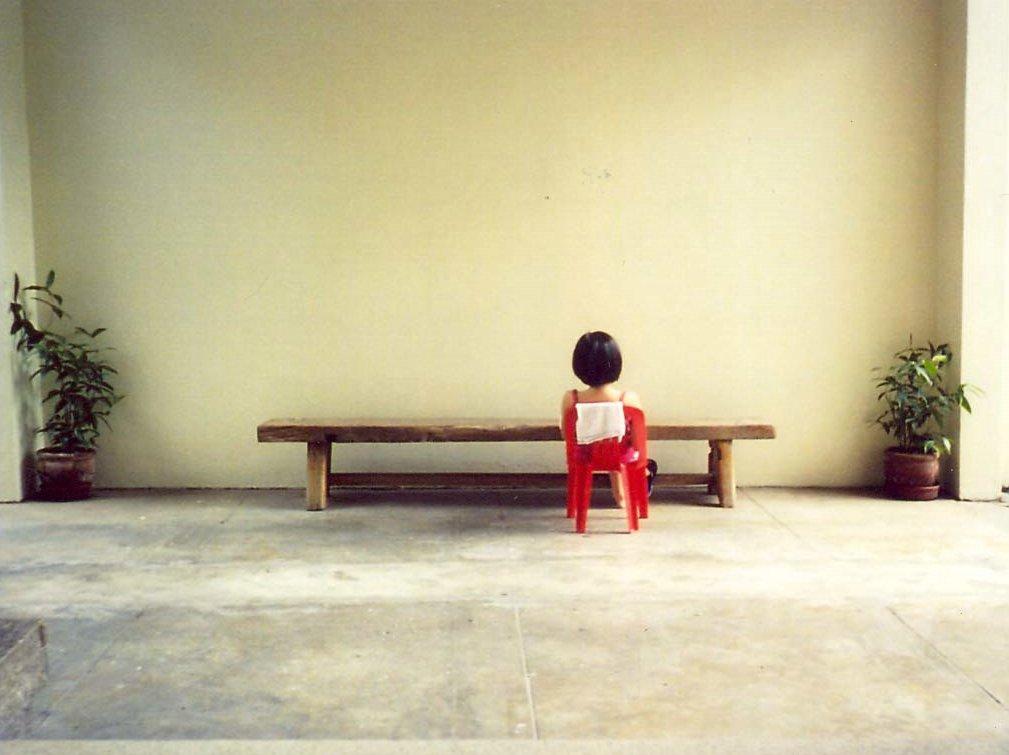
THE IDEA WAS NOT TO TELL A SINGLE SOUL. Neither Papa nor Mama should ever suspect that something was terribly wrong. They were both thousands of miles away from home, living in a foreign country; working hard to provide a comfortable life and a brighter future for everyone. And so as not to upset them, everyone at home must pretend everything was all right as always in Manila.
Right after promising she wouldn’t tell anyone, little Bechay decided to take a nap to sleep off her headache.
ONE MORNING, AS LOLA ARSING WATCHED little Bechay got on the tricycle that would take her to school, she started feeling a horrible sense of guilt. It wasn’t right, she told herself, to involve her granddaughter into this brewing dilemma. Little Bechay was much too young to participate in the adult world of pretense and deceit. But the burdened grandmother was left without any other choice.
She also noticed that Little Bechay has been spending more time alone lately; obsessively brushing her doll’s hair. She seemed lost in some world of her own.
The other day, she once again had to dip into the family savings entrusted to her by her daughter. What she had withdrawn so far indicated a significant amount. She was certain it would warrant her daughter’s suspicion once discovered. Lola Arsing hated the daunting task of having to explain everything to her daughter and son-in-law when they come home for vacation in a couple of months -- in time for the summer fiesta.
Lola Arsing wrapped the rolled up bundle of cash with her linen handkerchief and pinned it inside her blouse. She grabbed her pocketbook and folding fan and then swiftly headed out the door. The waiting driver of the tricycle knew exactly where to take her.
She arrived at the hospital just as Carmen finished a sponge bath assisted by her mother. Carmen’s bruises and lumps were healing just fine, but her doleful eyes still reflected the deep sadness of losing her baby. Seeing Carmen made it difficult for Lola Arsing to find a good enough reason to forgive Manuelito for having brought on such tragedy into these people’s lives. She uttered apologies as she handed over the money to Carmen that would pay the remaining balance of her hospitalization and medical expenses.
LATER THAT EVENING, LITTLE BECHAY was on the phone speaking with her father. Papa’s voice was as exuberant as ever. He was asking how his little princess was doing in school. Little Bechay did her best to put on a happy front; impressing even Lola Arsing with her pretentious chatter. However, just as the last few times Papa called, his voice lost its gleeful timbre once told Manuelito was not around to talk to him. Lola Arsing told him that his 15-year old athlete was still in school for basketball practice. "Don't worry, Manuelito is fine,"she assured him.
Actually, Manuelito had gone into hiding somewhere in the lush mountains of Quezon -- far from the vengeful hands of Carmen’s aggrieved husband. Crossing the street one Saturday evening, the couple froze in fright when the motorcycle driven by the intoxicated Manuelito came careening from the corner -- racing uncontrollably towards them. The impact sent Carmen flying off and landing on the sidewalk across the street. It caused her a miscarriage. It was the young couple’s much anticipated first child.
That tragic senseless accident happened three weeks ago on Manuelito’s 15th birthday. The young couple, with the urging of the barangay captain, agreed not to file any criminal charges against Manuelito if his family assumed all medical costs.
LITTLE BECHAY WAS RATTLED FROM HER REVERIE by the ringing telephone. She hesitantly answered it. Just as she feared, it was her mother on the line. She wanted to know if her precious little girl was able to keep a secret. If she were capable of such, Mama would buy her the bicycle she had been asking for.
Little Bechay asked in return if it were going to be for Christmas. Mama excitedly said sooner. But she must first know if Little Bechay could keep a secret. Apprehensively, she answered yes. Mama then told her that she and Papa will be arriving this coming weekend for a month’s vacation; two weeks sooner than expected. No one else knew about it, except Mama’s precious little girl. They wanted to surprise everybody.
Immediately after hanging up the phone, Little Bechay decided to take a nap to sleep off her headache.
Labels: Fiction
posted by Señor Enrique at 6:31 AM
| 1 comments
Monday, October 17, 2005
YELLOW CAB
 Some of the more perplexing yet, intriguing characters you can meet in New York are its cab drivers; not those who work the daytime shift, but the ones at night (they seem to have more of an edge about them).
One I came across was an Israeli who, as a teenager in Tel Aviv, spired to join the Mossad. With military service a prime requirement for applicants, he prepared for it by signing up for a stint with the Israeli Air Force’s pilot training program. It was so intensely gruelling -- both intellectually and psychologically -- that afterwards, his frailed nerves suggested a career in kibbutz management might be a more suitable choice after his discharge.
At one solo flight exercise, he was to fly sideways underneath a bridge; its clearance allowed just enough space for the aircraft to go through without clipping a wing.
I could only imagine that four years of excessive adrenaline rush from his training turned him into a reluctant addict that upon immigrating to New York, he was immediately drawn into the perilous excitement that New York cab driving offers – dodging holdups, theft of service scams and incorrigible New York pedestrians and passengers; all that while negotiating hair-raising overtakes and evading the unmerciful men in blue.
The next day, over lunch, I mentioned to one of my best friends who is Jewish how badly I felt for this man who was so rattled by his air force training that he failed to realize a teenage dream. He retorted that the driver was not so much tormented by the grim prospect of crashing a million-dollar jet into a bridge and die in the process as to be overwhelmed by guilt for having wasted millions of dollars for destroying both the jet and the bridge. Guilt, he exclaimed, is a major issue to the Jewish psyche. I guess he meant to be funny.
The other memorable cab driver I chanced upon was a struggling artist from Madison, Wisconsin. He was so new in the city that I had to navigate our entire journey from midtown Manhattan to Brooklyn’s Williamsburgh section. He was so dazed and confused – not with the city streets but in his entire demeanor – I figured he was either an innately brilliant artist or just took fine arts because he didn’t like math. A couple of months later, a friend dragged me to a gallery exhibit opening at the Lower East Side. While working the room, so to speak, I was surprised to run into this artist/cab driver. He didn’t quite remember me but told me anyway that he had just started working for Mark Kostabi. I didn’t know whether to be happy for him or not.
Links:
Mark Kostabi: Profile of an artist/industrialist
http://epe.lac-bac.gc.ca/100/202/300/artbus/1996/artbus.b02/featureone.html
New York City Taxi Cabs
http://www.ny.com/transportation/taxis/
New York City Address Locator
http://www.ny.com/locator/
Labels: Life in New York
posted by Señor Enrique at 8:34 AM
| 0 comments
Sunday, October 16, 2005
Special Photo Feature: spiritchild

Photo by spiritchild (Piya Cruz Constantino)
*
Labels: Featured photographer
posted by Señor Enrique at 6:38 AM
Saturday, October 15, 2005
GOLDEN YEARS

Walter could only grunt his consent when out of the blue, Ate Osang hastily flew home to the Philippines after receiving a letter from a cousin. She was rather vague about her reasons but Walter knew better than to press her for details. The more definite he wanted her to be, the more convoluted she would get. She assured him it would only be for two or three weeks the most. That was almost two months ago.
Married for almost 25 years, this was the only time they were away from one another. Had it not been for the Yankee playoff tickets he received as birthday gift, he would have gone with her. But then again it was Ate Osang who gave him the tickets. "Were these tickets part of some shady scheme," he asked himself paranoid.
Walter didn’t know whether to get upset or what, but Ate Osang’s rare and brief phone calls would usually come in the middle of the night. It would rouse him from sleep and he had to groggily make sense of what she was saying. Before he knew it, she was reminding him to stay away from junk food and then the call would abruptly end.
Walter finally called the U.S. Embassy in Manila to find out if his wife had registered as he had suggested. If she did, they could provide him with a telephone number where Ate Osang could be reached in case of an emergency. Unfortunately, she didn’t. Walter was getting frantic. The only relatives of hers that he personally knew are all dead now. What exactly was his wife up to, he wondered. He forced himself not to wallow in negative thoughts.
Walter was upset at himself for having neglected the mail piling up on the desk. He was so absorbed by Ate Osang’s abrupt departure and long absence that he overlooked other important matters in their life. As he made out checks to pay the bills, Walter almost had a heart attack upon seeing the latest bill from the American Express credit card he shared with Ate Osang. It indicated a cash advance of fifty thousand dollars. The transaction was made in Manila a week after Ate Osang arrived there. He was now feeling both belligerent and fearful.
Friends soon got wind of his dilemma and tried to help, but they immediately felt guilty about their collective ignorance of Ate Osang’s background and relations back in the Philippines. After all these years, they had considered her such a significant aspect of their American life that they had ignored everything Filipino about her.
Over dinner at one of these friends’ house one night, Walter recalled the time he met Ate Osang at the U.S. naval base in Olongapo City. He was a lanky 19-year old sailor back then, stationed in Subic for two years, while Ate Osang was a recent high school graduate whose aunt worked as a housemaid for a top ranking naval officer inside the base.
One time, the officer and his wife threw a big party for some visiting admiral and needed extra hands. Osang helped in the kitchen. Walter volunteered in exchange for an extra weekend pass and was tasked to handle the barbecue pit. The two met and two years later, Osang and Walter were off to America to build a life together. They have two girls who are both married now, with children of their own; one lives in Oregon, the other in Maine.
After giving notice to the girls he was going to the Philippines to find their mother, Walter flew to Manila with his best friend Hank, who was more than happy to finally go to back to the Philippines. Last he was there was on an R&R when he was a marine stationed in Vietnam. Hank’s wife died of cervical cancer five years ago. He was hoping to find a nice Filipina for himself while on this search and rescue mission.
It wasn’t so hard to find Ate Osang after all. Upon landing in Manila, they rented a car and immediately headed to Ate Osang’s hometown in Subic. Once there, they asked the first man they saw if he knew anything about Ate Osang or any of her relatives after giving him her family’s last name. This was a small town. Any news about anyone vacationing here from the States would be common knowledge before the end of the day. The man gladly directed them to where Osang was staying.
Sure enough, there was Ate Osang seated under a mango tree busily chatting with some women while they snacked on dried and salted watermelon seeds. Ate Osang screamed with delight upon seeing her husband and Hank. Walter was just as thrilled to see her that all feelings of exhaustion from the trip vanished. After the usual hugs and kisses, he suddenly felt famished.
Both Walter and Hank could hardly get up from their seats after enjoying such a hearty meal of fresh vegetables, chicken and pork adobo, and ripe mangoes. Walter jokingly remarked that he missed the tropical weather and the fresh food so much they ought to just stay in the Philippines. With that said, both men and a couple of other people were whisked off by Ate Osang to another place. With Walter and Hank and the others squeezed into the compact sedan, Ate Osang drove heading towards the beach.
As they reached their destination, Ate Osang proudly pointed to a small house being built. It was her gift to her husband for their upcoming 25th year anniversary. For many years, she saved some of the money she made from her job at the supermarket. She had always dreamed of one day buying a small parcel of land right on this beach where she grew up, and building a small quaint house to where they could spend their golden years together. And her dream came true when her cousin wrote her a letter to say that the owner was selling the property to pay off some gambling debts.
Walter was speechless. For years he also thought of spending their retirement in the Philippines. He was just afraid to bring it up because most of Ate Osang’s Filipino friends in New York only had negative things to say about the Philippines. He thought she would never dare go back to her native country, but was he glad he was wrong.
Ate Osang suddenly shouted that these two Amerikanos ought to start getting some color on their blinding pale skin. Both men were embarrassed at first but soon joined in the laughter. As Ate Osang led them to another hut where they could change into their swimming shorts, she mentioned that she was in such a frenzied state she forgot to make a withdrawal on her savings account before she left for Manila so, she used their credit card to get immediate cash. Walter told her not to make any withdrawals from her account to pay off the bill; he already paid it with his personal checking account. That would be his gift to her.
As the two men enjoyed the warm water of Subic Bay, Walter remarked about his wife's booming voice as she gave instructions to the men building their house. It would get progressively louder the less the men understood her. Walter realized that even in tagalog, circumlocution seemed like a mastered art for his wife. Hank could only smile in response. But then Walter realized, however Ate Osang choose to express herself, he couldn't live life without his Filipina wife.
Nowadays, Walter can be found tirelessly cleaning his small powered boat or playing chess with Hank in front of their house on the beach. Hank had married Ate Osang’s cousin, Ate Linda, whom everyone thought would die an old maid. They had bought the vacant lot nearby and built a nice bungalow on it. The two Filipina housewives had started a business of creating trinkets made of local shells, beads, and washed stones.
The four of them plan on going to New York next year for the Christmas holidays. Ate Osang suggested to bring along some samples to show to Bergdorf's fashion jewelry buyer. Walter quickly quipped that Ate Linda should make the presentation; much to his regret as Ate Osang slowly turned to face his cowered husband.
Links:
Bergdorf Goodman, New York
http://www.bergdorfgoodman.com/
Subic Bay Travel Destination
http://www.tourism.gov.ph/explore_phil/place_details.asp?content=famousefor&province=14
Labels: Fiction
posted by Señor Enrique at 12:57 PM
| 0 comments
Friday, October 14, 2005
Magazine Feature: VANITY FAIR
 DEFINING CULTURE
My brother used to stuff Vanity Fair magazines in whatever free space there was in the balikbayan box he'd ship over now and then. He knew how much I enjoy reading this magazine. Subsequently, as I assimilated into the local culture, I made a wonderful discovery: the used book kiosk at the university belt area that I pass by often also sells back issues of some U.S. magazines, including Vanity Fair.
After two or three months of buying from this kiosk, while walking by one afternoon, I was pleasantly surprised when the saleslady who has now gotten to know me by face, motioned for me to come over. I was certain she had a newly-arrived edition saved for me. She bent down to dig up something from a shelf behind the counter. Although enclosed in a plastic bag, I could tell it was a magazine as she -- as if in some clandestinely fashion -- revealed the top portion of its glossy cover. It wasn't Vanity Fair. Noticing the puzzled look on my face, she exposed just a little bit more of its cover. Suddenly, I realized she was showing me some gay magazine, which I presumed was too salacious in cover and content as to be publicly displayed with the others.
I could only chuckle in response. With Vanity Fair’s covers – of mostly stars in the film and music industries styled in elegant couture -- the saleslady must have assumed it was a publication in the same league as Vogue, Harper’s and Cosmo whose readership comprised mostly of women and gay men.
I should have told her that, on the contrary, it is more in the company of smart magazines such as New Yorker, Life, and Esquire. And that Vanity Fair, launched way back in 1913 as a voice for the avant-garde, evolved into its present form as a fascinating mix of image and intellect; highlighting people, places, and ideas that define modern culture.
With celebrated writers like Dominick Dunne and Gail Sheehy, and award-winning photographers like Annie Leibovitz and Bruce Weber, Vanity Fair gives fascinating profiles of people and power like no other magazine. Most of their contributors are famed novelists and seasoned correspondents. As a whole, Vanity Fair’s literary style is intelligently accessible; its photo journals superb.
They will feature say, the masters of modern architecture this month and on the next, expose the power behind hip-hop’s dark underbelly. They can be iconoclastic on one story, and absurdly silly on another. From the majestic abodes of the English royalty to the seedy dungeons of L.A.’s S&M subculture, from the bizarre to the sublime, Vanity Fair will cover any intrigue either through image or text, or both.
Vanity Fair is unpredictably cool.
Get a taste of VF now, click here.
Labels: featured magazine
posted by Señor Enrique at 8:23 AM